

A living legacy
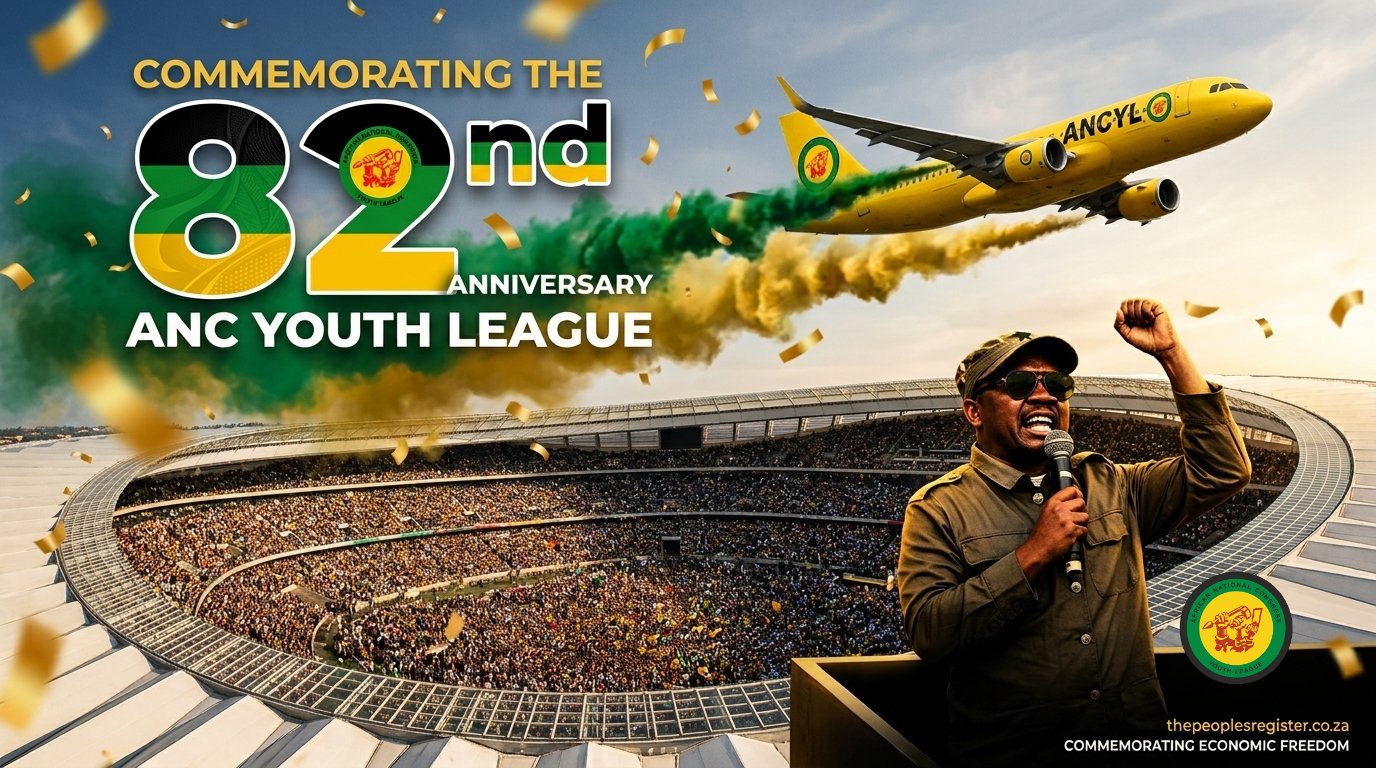
The African National Congress Youth League (ANCYL) turns 82 today as a movement with history in its bones and a renewed political programme in its hands.
Founded in 1944 by a generation of young activists determined to shake the ANC into greater militancy and purpose, the League helped define a tradition of youth leadership that has shaped South African politics ever since. Anton Lembede became its first president, while Nelson Mandela, Walter Sisulu, Oliver Tambo and A.P. Mda stood among the young voices that gave the organisation its early force.
Eighty-two years later, the ANCYL remains a place where the question of youth is not ornamental but political. Its anniversary is not simply a date of remembrance. It is a moment to measure what young people have inherited, what they are fighting for and what kind of country they intend to build.
That work is now being carried by a leadership collective headed by Collen Malatji, whose public programme places youth employment, economic participation and representation at the centre of the League’s agenda.
The message is familiar in theme but urgent in purpose: young people must be organised, represented and economically included, not deferred to some later generation.
A movement forged in 1944
The ANCYL’s founding moment remains central to its identity.
On Easter Sunday in 1944, young activists gathered at the Bantu Men’s Social Centre in Johannesburg to launch the organisation. The purpose was not simply to create another internal structure within the ANC. It was to give political expression to a generation that believed the struggle against oppression required sharper thought, stronger organisation and greater militancy.
Lembede’s leadership gave the League an ideological clarity that would shape its future influence. The youth movement became one of the decisive forces pushing the ANC toward the Programme of Action in 1949, a turning point in the movement’s history.
That legacy matters because it explains why the ANCYL still carries symbolic and political weight.
The League was built to do more than celebrate youth. It was built to challenge complacency, develop leaders and force the movement to confront the realities of its time.
That is still the measure by which it should be judged.
The collective now carrying the banner
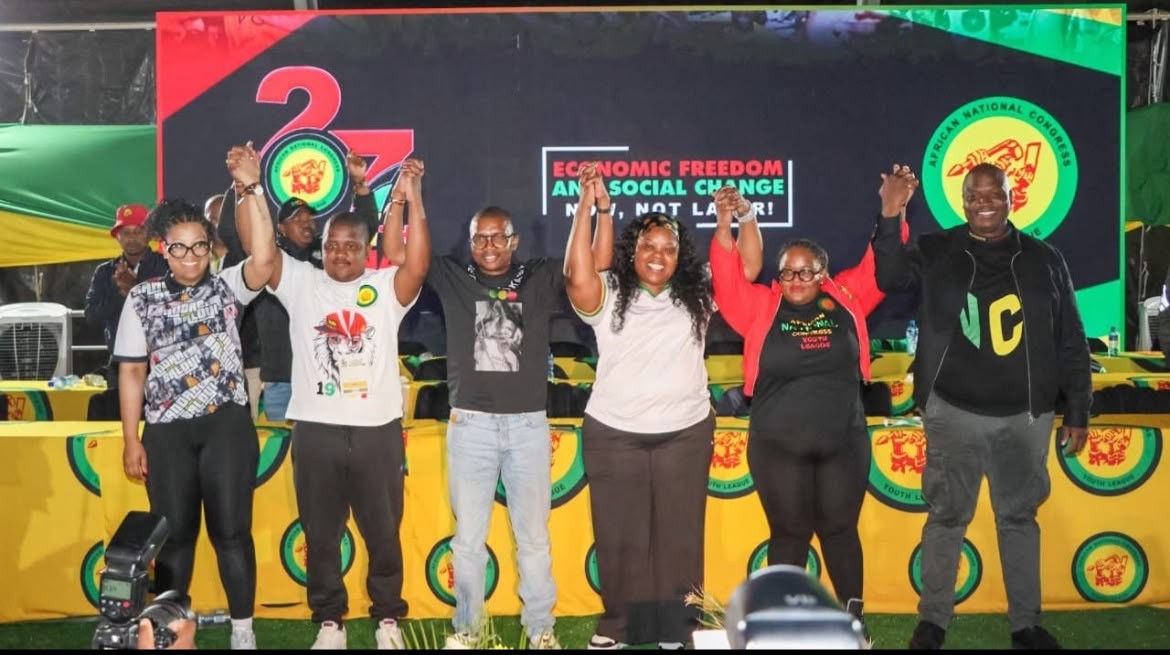
The current ANCYL is not the work of one individual. It is a collective led by Collen Malatji and supported by national officials, provincial structures, branches and activists who carry the organisation’s political work into communities, campuses and workplaces.
That collective dimension is important. The League’s strength lies not only in the visibility of its president, but in the organisation that surrounds him.
Collen Malatji has become the public face of the ANCYL’s present programme, yet the anniversary belongs to the broader leadership collective that has kept youth issues active in the national conversation.
The emphasis on collective leadership gives the organisation continuity. It also gives the anniversary its proper dignity: a movement is being celebrated, not a personality.
A movement is being celebrated,
not a personality.
Malatji and the current agenda
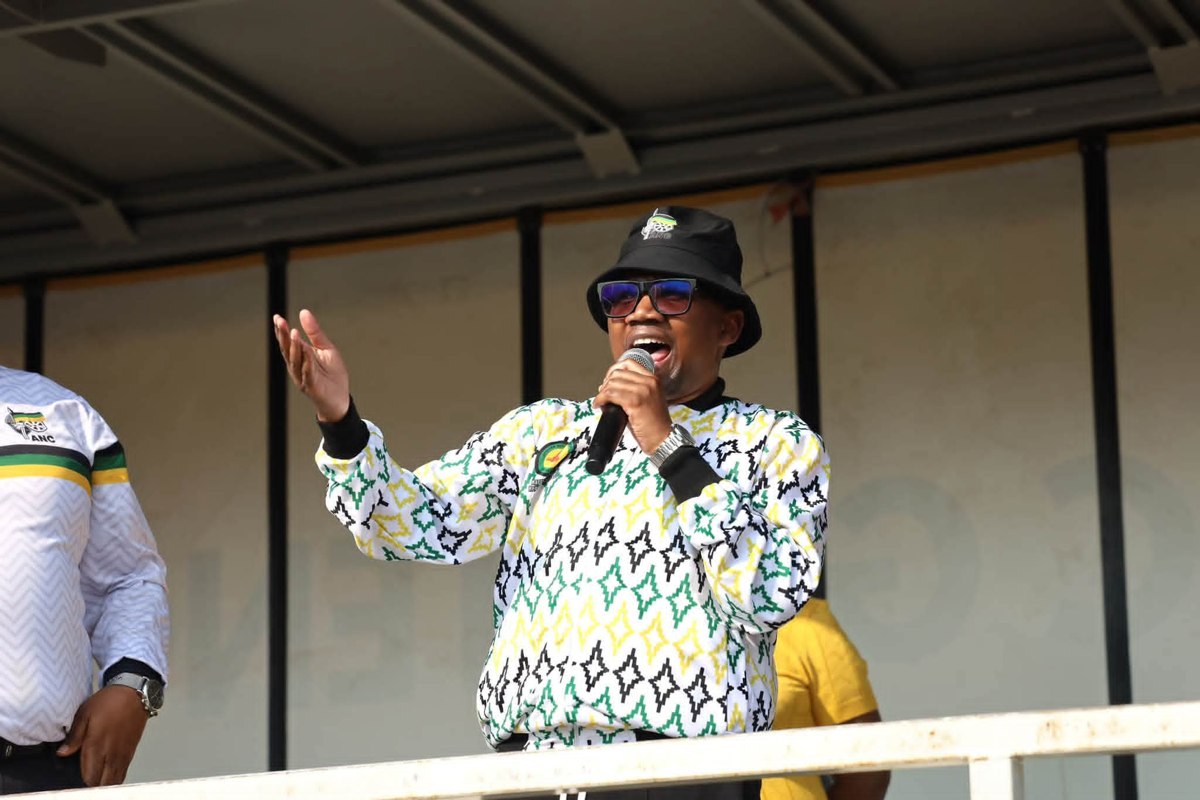
Collen Malatji was re-elected unopposed as ANCYL president at the organisation’s 27th National Congress in December 2025. The congress was held under the banner “Economic Freedom and Social Change: Now, Not Later.”
That theme captures the political direction of the present leadership.
The League has placed youth unemployment, economic exclusion and political under-representation at the centre of its work. It has argued that young people cannot be asked to wait indefinitely for meaningful participation in the economy and in public life.
Malatji has given consistent voice to that position.
At the December 2025 elective conference, Malatji called for mass job opportunities for young people in agriculture, mining and manufacturing, according to The Citizen’s report.
The report also recorded his call for more young people in leadership roles in government and the private sector.
The political line is clear.
Youth freedom is not only about being heard. It is about access to work, access to opportunity, access to ownership and access to decision-making.
Jobs as a political demand
The ANCYL has also proposed a practical intervention through Programme Youth Job.
Announced ahead of the 2026 Youth Day commemorations, the initiative called on unemployed young people attending the programme to submit their CVs, linking political participation to the search for employment. IOL reported the proposal in May; that announcement does not establish how many CVs were subsequently collected or how many people secured work.
The proposal sought to move beyond a symbolic gesture.
It reflected the League’s view that youth politics must answer directly to the material conditions of young South Africans. Political speeches matter, but jobs matter more. Mobilisation matters, but so does access to opportunity. A youth movement that speaks about dignity must also speak about income, work and a realistic future.
Programme Youth Job was presented as a way to give practical form to that belief.
That ambition helps explain why the ANCYL still matters. The League is not only a commentary machine. It is trying, in its own way, to build bridges between youth activism and the economy that young people must enter.
A generation’s place in the economy
and in public life
Youth employment and pathways into economic participation.
Access to opportunity and a greater stake in the economy.
A voice in Parliament, local government and decision-making.
Representation in the institutions of power
The ANCYL’s current politics has also focused on representation.
The League has argued for greater youth representation in the institutions of government, making the case that a generation so deeply affected by unemployment, education, housing and economic policy must not remain underrepresented in the institutions that govern those issues.
The argument extends beyond Parliament.
Ahead of the 2026 Local Government Elections, the demand for greater youth representation also has direct relevance to ward councillor positions and local government.
That demand has particular force because municipalities are where democracy is most immediate.
Water, sanitation, electricity, roads, waste collection, maintenance of public spaces and local economic development are all part of how communities judge whether government is working.
Young people must therefore be more than campaign volunteers or election day supporters. They must be present in the rooms where local decisions are made, and they must be equipped to govern well when given that responsibility.
The ANCYL’s push for greater youth participation is therefore not only about age. It is about widening the pool of leadership and ensuring that the generation that will inherit the country has a hand in shaping it now.
Marking the anniversary among communities
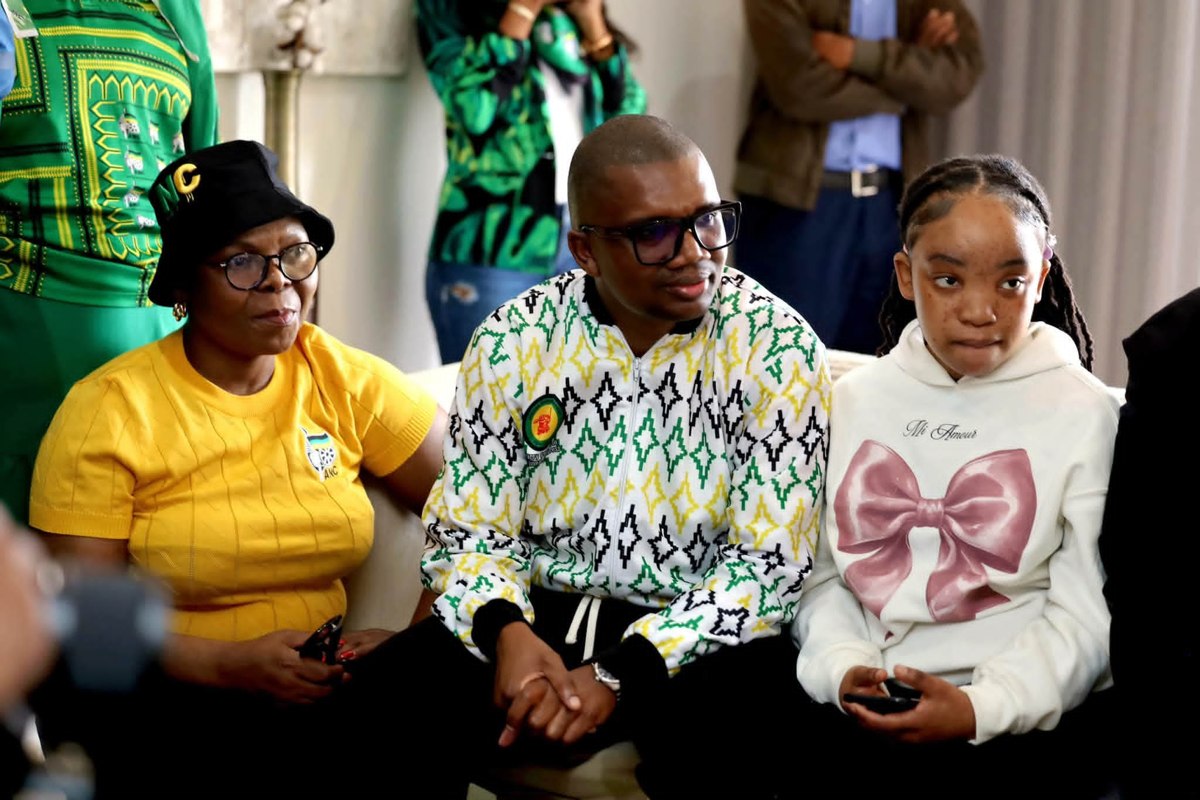
The anniversary is also being marked through engagements beyond the ceremonial stage.
In a statement supplied to the desk, the ANCYL said Malatji led a delegation to the Bakwena Ba Mogopa Royal House in Bethanie, North West, to pay respects to Kgosi Motheo Mamogale as part of the League’s 82nd-anniversary programme.
The supplied account of the League’s Tembisa programme also describes door-to-door engagements and a concluding community meeting addressed by ANC President Cyril Ramaphosa.
These engagements place the anniversary alongside the everyday work of listening, organising and maintaining contact with communities. They give practical expression to the argument that the League’s history must remain connected to the lives of the people it seeks to represent.
What Lembede still means
Anton Lembede remains a powerful figure in the ANCYL’s memory because he symbolises a style of leadership that the organisation still claims as its own: disciplined, analytical, courageous and rooted in principle.
That is why the anniversary can never be reduced to ceremonial language alone.
Lembede’s legacy was not the performance of youthfulness. It was the insistence that young people think seriously, organise seriously and act on the political realities before them.
That standard still applies.
If the ANCYL is to honour its history, it must continue building leaders who understand the conditions of their generation and can turn political conviction into real social power.
Why this anniversary matters now
The ANCYL’s 82nd anniversary arrives at a moment when South Africa’s youth question remains urgent.
Young people still face unemployment, uneven access to the economy, frustration with representation and pressure to participate in a democracy that too often asks for commitment without always delivering opportunity.
That is why the League’s current agenda matters.
The present leadership collective has put the question of youth back where it belongs, at the centre of political discussion. Collen Malatji has given that programme a public voice. The membership and broader leadership structure have given it organisational form.
But the deeper story is institutional.
The ANCYL has survived because each generation has been required to answer the same question in new conditions: how should young people organise, lead and shape the future of their country?
Eighty-two years after its founding, that question still defines the League’s purpose.
And on this anniversary, the answer remains rooted in the same conviction that gave the organisation life in 1944: young people must not only inherit South Africa. They must help build it.
Happy 82nd Anniversary to the African National Congress Youth League.
Related reading
Sources and further reading
Historical background and reporting underpin this commemorative feature. Programme Youth Job is described as announced, not as evidence of completed job placements. Photograph context comes from the ANCYL statements supplied to the desk.