
Opinion · ANC & organisational renewal
The ANC: pragmatism in renewal
A political paper on organisational crisis, historical continuity and the question of political reconstruction.
Contextual note
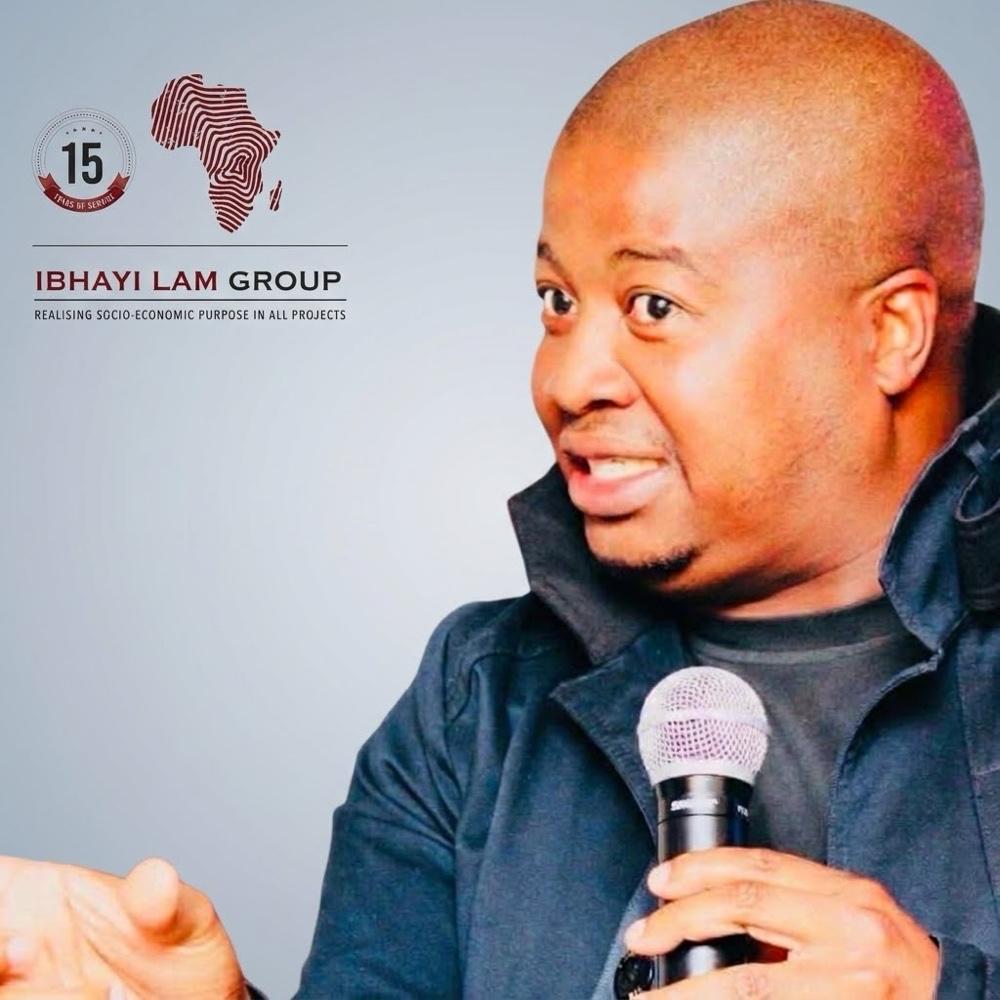
This paper was born from a political conversation between Bongani Mabusela and Cde Bongani Mani on the question of African National Congress renewal, organisational crisis and the possibilities for political reconstruction. The arguments developed here are a consolidation and further political reflection on themes arising from that conversation, approached through a materialist and Marxist analytical framework.
1. Political Summation
The African National Congress stands before a profound political question: can an organisation renew itself through the very structures, political practices and leadership configurations that have contributed to the conditions from which the call for renewal has emerged?
This is not merely a question about personalities. It is a question about political organisation, historical continuity, class relations and the material conditions within which the ANC operates.
The contemporary discussion about ANC renewal is frequently presented as a question of leadership renewal. New leaders, new generations, new organisational programmes and new political commitments are proposed as instruments through which the organisation can recover its political authority.
But a more fundamental question must be asked: Is leadership renewal sufficient when the structures through which political leadership is produced and reproduced remain substantially unchanged?
If the problem is structural, then a structural response is required. If the crisis is political, organisational and ideological, then it cannot be resolved merely through personnel changes.
The ANC must therefore confront the possibility that renewal cannot simply mean returning to an earlier version of itself. It may require a critical examination of what the organisation has become, what historical conditions produced its present form, and whether that form remains adequate to the political and material realities of the present.
This is where pragmatism becomes important. Pragmatism should not mean abandoning principle. It should mean having the political courage to examine reality without allowing organisational sentiment, historical nostalgia or institutional orthodoxy to prevent serious questions from being asked.
2. The Problem of Renewal
Is it a fair expectation that the current cohorts of leaders operating within the structures and political arrangements associated with the ANC's present condition should themselves be expected to renew the organisation?
The question is uncomfortable precisely because it challenges a conventional understanding of organisational continuity.
An organisation experiencing decay can naturally seek renewal through its existing leadership structures. Yet this creates a contradiction. The very structures that reproduce leadership may also reproduce the organisational practices that produced the crisis.
This raises an important distinction between changing personnel and changing political relations.
A new leadership collective can inherit an old organisational culture. A new generation can inherit old institutional incentives. New resolutions can operate through old structures. New political language can coexist with old political practices.
Consequently, renewal cannot be reduced to generational replacement.
The question is not simply: Who should lead? It is: What political and organisational system will that leadership inherit, reproduce or transform?
3. A Materialist Understanding of Organisational Crisis
A Marxist approach begins by rejecting the assumption that political organisations exist independently of material society.
Political organisations are products of history. They are shaped by social forces, economic relations, class interests, institutions and struggles over political power.
The ANC is therefore not outside the contradictions of South African society.
Its organisational development must be understood within the broader historical movement from liberation struggle to political administration, from mass mobilisation to institutional governance, and from opposition to the apartheid state to participation in the post-apartheid state.
This transformation inevitably produced contradictions.
The organisation that historically mobilised people against an oppressive political order became an organisation responsible for exercising political authority within a state.
The relationship between movement and state consequently became increasingly complex.
A materialist analysis therefore asks not simply what leaders say, but what organisational practices and social relations are being reproduced.
4. From Individual Failure to Structural Contradiction
Political debate often explains organisational decline through individual behaviour. One leader is blamed. Another is praised. One generation is condemned. Another is presented as the solution.
But this approach risks reducing structural contradictions to personal morality.
A materialist analysis asks a deeper question: What conditions allow particular political practices to emerge, survive and reproduce themselves?
This is the distinction between an individual explanation and a structural explanation.
Individual conduct matters. Leadership matters. Political accountability matters. But individual behaviour does not occur in a vacuum.
Political actors operate within institutions that create incentives, constraints and opportunities.
Therefore, if the ANC seeks genuine renewal, it must interrogate the organisational conditions under which political behaviour is reproduced.
Otherwise, renewal may become a process of replacing individuals while preserving the system that shaped them.
That would amount to reproduction disguised as renewal.
5. The Dialectics of Renewal
There is a dialectical contradiction at the centre of the renewal debate.
The ANC must preserve its historical identity while confronting the possibility that some aspects of its inherited organisational form may no longer be adequate to contemporary conditions.
This creates two opposing dangers.
The first is nostalgia: the belief that renewal means returning to a previous organisational or political moment.
The second is historical amnesia: the belief that renewal requires abandoning the historical tradition from which the organisation emerged.
Neither position provides a sufficient political answer.
A dialectical approach asks: What must be preserved, what must be negated, and what must be reconstructed?
Historical memory may need to be preserved. Political practices may need to be negated. Organisational structures may need to be reconstructed.
The objective is therefore neither preservation for its own sake nor destruction for its own sake.
The objective is transformation.
6. Must the ANC Die for the ANC to Live?
This brings us to the most difficult proposition.
Perhaps the time has come for the movement to ask whether the ANC, as presently constituted, must undergo a form of political death in order for the historical political tradition associated with the ANC to live again.
This proposition may initially appear far-fetched. But political organisations are historical formations. They are born under particular conditions. They develop structures appropriate to particular historical periods. And historical conditions change.
When an organisational form becomes increasingly disconnected from the material conditions and social forces that gave birth to it, a contradiction emerges between form and substance.
The form may survive while the political substance deteriorates.
This raises a profound question: Is preserving the organisational form necessarily the same thing as preserving the political project?
The answer cannot simply be assumed.
The ANC as an organisation and the political tradition represented by the ANC are related, but they are not conceptually identical.
One is an organisational form. The other is a historical political tradition.
The distinction matters because organisational death does not necessarily mean political death.
A political tradition can be reconstructed. It can be carried into new organisational forms. It can be transformed in response to changed historical conditions.
The political question, therefore, is not merely whether the ANC should survive. It is whether its historical political project can continue to develop within its present organisational form.
7. The Question of Class
A Marxist discussion of ANC renewal cannot avoid the question of class.
Political organisations do not exist above class society. They operate within a society characterised by unequal ownership, unequal access to resources and competing economic interests.
Consequently, any serious discussion of political renewal must ask: Which social forces does the ANC currently represent? Which class interests influence its political direction? What is the relationship between the organisation and working-class communities? What is its relationship with the unemployed, the rural poor and marginalised communities? How does it relate to emerging black economic interests?
These questions are more important than merely identifying individual political personalities.
A political organisation may contain multiple class interests within the same broad coalition. Such coalitions can remain politically coherent for particular historical periods while simultaneously containing contradictions.
The task of political theory is not to deny those contradictions. It is to understand them.
8. The Movement, the State and Political Power
One of the central contradictions of liberation politics is the transition from movement to government.
A liberation movement seeks to transform society. A government must administer the institutions of the state.
When a liberation movement becomes the governing political organisation, the distinction between movement politics and state administration becomes increasingly complicated.
The danger is that the organisation becomes absorbed by the institutional logic of the state rather than transforming the underlying social relations inherited from the previous order.
This is a fundamental materialist question.
Political power in government does not automatically translate into control over the deeper economic relations of society.
Formal political authority and material economic power are not identical.
A political organisation can exercise state power while significant economic structures remain outside its direct control.
This creates a contradiction between political sovereignty and economic power.
A meaningful renewal project must therefore ask whether the organisation's political programme is capable of confronting the material conditions experienced by the majority of society.
9. Beyond Moralism
The renewal debate must also move beyond moralism.
Moral language has its place in political accountability. But moral condemnation cannot substitute for political economy.
Calling individuals corrupt does not explain the structures that permit corruption. Condemning factionalism does not explain the material interests that produce factional competition. Criticising organisational paralysis does not explain why organisational mechanisms repeatedly reproduce paralysis.
A materialist approach therefore asks: What are the conditions of reproduction?
What interests are being reproduced? What relationships of power are being reproduced? What organisational incentives are being reproduced?
And, most importantly: What must change for different political outcomes to become possible?
This is the level at which renewal becomes a serious political project rather than an organisational slogan.
10. Renewal or Reproduction?
The most serious danger is that renewal becomes synonymous with organisational survival.
An organisation may declare itself renewed because it has elected new leaders. But if the underlying political relationships remain unchanged, the organisation may simply be reproducing itself under a new vocabulary.
Renewal means changing the political substance, organisational relationships and strategic orientation of the organisation.
Reproduction means maintaining the underlying system while changing its personnel, rhetoric or external appearance.
The ANC must therefore ask whether its renewal process is capable of changing the conditions that reproduce its present contradictions.
If not, then the word renewal risks becoming politically empty.
11. Pragmatism Without Political Surrender
Pragmatism must not be confused with ideological surrender.
A pragmatic politics does not mean abandoning historical principles whenever circumstances become difficult.
It means starting from concrete reality.
If existing structures can be transformed, then the question is how they should be transformed.
If they cannot be transformed, then political imagination must consider alternative organisational possibilities.
The mistake would be to decide the answer before undertaking the analysis.
A serious Marxist politics requires concrete analysis of concrete conditions. The question must therefore remain open.
12. The Political Question of Organisational Death
There is an important historical lesson in the proposition that political forms can disappear while political traditions survive.
The death of an organisational form does not automatically mean the death of the social aspirations that gave rise to it.
Equally, preserving an organisation does not necessarily preserve its original political purpose.
This distinction allows the ANC renewal debate to move beyond an artificial binary: ANC survives versus ANC disappears.
The more important question is: What happens to the political project?
If the existing organisation remains capable of renewing itself, restructuring itself and reconnecting itself with the material interests of its social base, then organisational transformation may remain possible from within.
But if the organisation becomes incapable of such transformation, political thought must be prepared to consider whether the historical project requires a new political configuration.
That is not necessarily an argument for organisational destruction. It is an argument for refusing to confuse an organisation with the entirety of its historical political meaning.
13. Towards a New Political Imagination
The ANC's crisis therefore requires political imagination.
Renewal cannot be reduced to slogans. It cannot be reduced to conferences. It cannot be reduced to leadership changes. It cannot be reduced to nostalgia for an earlier period. And it cannot be reduced to moral condemnation of those currently occupying leadership positions.
A serious renewal project must interrogate the material conditions of South African society; the changing class structure; the relationship between political and economic power; the relationship between the organisation and its historical social base; the organisational structures through which leadership is reproduced; the relationship between the movement and the state; the political meaning of liberation in contemporary conditions; and the organisational form required to carry that political project into the future.
These are not secondary questions. They constitute the core of the renewal debate.
14. Questions for Political Discussion
1. Can the ANC renew itself through substantially the same structures that produced its current organisational contradictions?
2. Is leadership renewal possible without structural renewal?
3. Can generational change produce political transformation if the underlying organisational relations remain unchanged?
4. What class interests are currently represented within the ANC's political and organisational structures?
5. What is the contemporary relationship between the ANC and the working class, the unemployed, the rural poor and marginalised communities?
6. What aspects of the ANC's historical tradition must be preserved?
7. What organisational and political practices must be negated?
8. What must be reconstructed?
9. Can the historical political project associated with the ANC survive if the existing organisational form cannot renew itself?
10. Is organisational survival the ultimate objective, or is organisational survival only meaningful insofar as it advances a broader political project?
15. Conclusion: The Question Beyond Survival
The ANC therefore confronts a contradiction that cannot be resolved through organisational rhetoric alone.
It can speak of renewal while reproducing the conditions that make renewal necessary.
It can change leaders without changing political relations.
It can produce new resolutions without changing organisational practice.
It can invoke historical legitimacy without necessarily reproducing the political substance of the history from which that legitimacy derives.
The challenge is therefore to move beyond the question of who will renew the ANC and towards the more fundamental question of what political organisation is required by the material conditions of the present.
A Marxist approach does not permit us to treat political organisations as timeless institutions. They are historical forms. They emerge. They develop. They accumulate contradictions. And they can either transform themselves in response to those contradictions or become increasingly incapable of resolving them.
This is why the proposition that the ANC may have to "die" in order for the ANC political tradition to live again should not simply be dismissed as heresy. It must be interrogated historically and materially.
The purpose is not to celebrate organisational death. Nor is it to defend organisational survival at any cost.
The task is to establish what is historically necessary.
The ANC's greatest challenge may therefore not be whether it can reproduce itself. It may be whether it can transform itself beyond the organisational and political conditions that currently constrain it.
The decisive distinction is between form and substance.
The ANC is an organisational form. Its historical political tradition is the substance that gave that form meaning.
If the form can be transformed, then transformation must be pursued.
If the form becomes an obstacle to the substance, then political thought must be courageous enough to interrogate the form itself.
This is the essence of pragmatism in renewal: not surrendering principle to reality, but using an honest understanding of reality to determine what political forms are capable of carrying principle into the future.
The fundamental question is therefore not simply: "How do we save the ANC?" It is: "How do we ensure that the emancipatory political project historically associated with the ANC does not become imprisoned by the organisational form through which it was historically expressed?"
That is the real question of renewal.
And it is a question that demands not nostalgia, but historical consciousness; not organisational preservation for its own sake, but political reconstruction; and not merely new leaders, but a serious reconsideration of the relationship between class, organisation, state power, political strategy and historical purpose.