
Sponsored Feature · Elections 2026 · Knysna
The new kids want the keys: UPPA’s bid for an outright majority in Knysna
From repairing homes and grading a Ward 11 road to engaging taxi operators and supporting community life, UPPA is building a campaign around practical intervention. Its larger ambition is a majority mandate to put a six-point municipal programme to work in Knysna.
Sponsored by UPPA, the United Progressive People Alliance.

UPPA is entering Knysna’s election with an ambition that would change the terms of its politics: enough seats to govern in its own right. The United Progressive People Alliance wants an outright majority, with Waleed Grootboom as its mayoral candidate and the repair of local government at the centre of its offer.
The campaign reaches from residents’ homes to the roads and livelihoods that connect the town. Building and repairing homes, reinforcing roofs, grading a road in Ward 11 and engaging the transport industry form part of the wider work described by UPPA. Food support, skills development, sport and culture add further dimensions to a campaign seeking a place in the everyday life of its communities.
Behind those interventions is a six-point plan: strengthen the municipality, fix its finances, deliver basic services, improve housing, make communities safer and grow the local economy. The proposition is that these tasks belong together. A household needs a secure home and dependable services; a worker needs access to employment; an enterprise needs the infrastructure and decisions that allow it to operate.
Grootboom’s campaign is asking residents to connect the work they encounter in their neighbourhoods with that larger governing offer. UPPA wants to turn its presence on the ground into a mandate for the municipality as a whole.
Why the majority question matters in Knysna
Knysna has a particular history against which to hear that appeal. The 2021 election produced a divided council, with the DA holding eight seats and the ANC seven in a 21-seat chamber. Neither could govern alone. ACCORD’s coalition record traces the subsequent passage from a DA-led administration to an ANC-led coalition in August 2022, followed by further changes in mayoral leadership.
In that setting, UPPA is seeking the electoral strength to lead through its own council mandate. In the municipality’s published 21-member structure, a party needs at least 11 seats for an outright majority. The mayor is elected by the council. Securing that mandate is the goal around which the party is organising its Knysna campaign.
The question of governing authority sits alongside substantial work on the services residents use. In April, the Western Cape government reported progress under Knysna’s strengthened support and turnaround programme, including road works, water infrastructure, sewer pump stations, waste facilities and technical staffing. It also acknowledged that challenges remained. Recovery is already a public undertaking involving the municipality and other spheres of government.
UPPA is seeking a mandate to take political responsibility for that continuing work. Its six-point programme places administrative capacity and financial discipline at the beginning of the story, recognising that the visible condition of a town is closely connected to what happens inside its municipal offices.
The plan starts inside the municipality
The first two priorities, “Fix the Municipality” and “Fix the Money”, are the foundation of UPPA’s offer. The party proposes a professional and ethical administration, investment in staff development and morale, and consequences for corruption. Alongside that, it wants to improve billing and meter readings, correct inaccurate accounts, tackle illegal connections and reduce wasteful expenditure.
These are practical political choices. A billing error can become a prolonged dispute for a household or a business. An unreliable revenue system weakens the municipality’s ability to plan and pay for its work. A vacant technical post or a poorly managed contract can delay a repair long after a councillor has promised action. Administrative competence reaches residents through the quality and consistency of the service they receive.
UPPA’s Knysna statement issued on 6 October gives this part of the programme a sharper local expression. It calls for transparent contracts, appointments based on competence and integrity, protection for whistleblowers, functioning council oversight and a review of procurement and contract management. It also calls for the recovery of public funds proven to have been unlawfully obtained or lost.
The position is that municipal money should remain connected to its public purpose. Procurement buys the equipment, maintenance and services on which residents depend. Oversight establishes whether that work was delivered. Staff need the skills and support to perform, while political leaders need to respect the rules governing public resources.
For UPPA, the promise to fix a municipality begins with this work. A dependable administration and credible financial systems support the rest of its programme. In Knysna, putting that national blueprint to work would mean directing local budgets, appointments and implementation towards those priorities.
From the municipal account to the street outside
Three further priorities concern the places in which people live. UPPA’s basic-services programme covers water, sanitation, electricity, refuse collection and road maintenance, with transparent delivery targets. Its housing proposals include formalising informal settlements, upgrading infrastructure, unlocking stalled projects and replacing chemical toilets. Its safety agenda brings together public lighting, visible municipal policing, community safety structures, rapid repairs and action against illegal dumping.
The connection between them is daily experience. A settlement needs infrastructure as well as recognition on a plan. A public space needs lighting, cleaning and maintenance to remain usable. A repaired road helps residents travel and businesses move their goods. A reliable collection service changes the condition of a neighbourhood every week.
Housing also carries a question of dignity. Formalisation and infrastructure upgrades are about the security and conditions in which a household builds its life. Progress requires coordination across the authorities responsible for land, housing and services. UPPA puts that work within its wider commitment to repairing local government, giving it a place alongside the everyday systems that support an established neighbourhood.
This is a municipal platform organised around the relationship between a household and the town around it. The six priorities give UPPA’s community campaign a policy destination: reliable services, safer public spaces and settlements connected to the infrastructure that residents need.
Homes, roofs and a road: the work behind Grootboom’s bid
UPPA’s banner is new to this contest, but Grootboom is an experienced figure in Knysna’s council politics. A municipal agenda records his February 2022 appointment, then as a Patriotic Alliance councillor, to the mayoral committee with responsibility for community services. He is now seeking to lead a municipality whose council he has already served.
The campaign information supplied to TPR describes work across residents’ homes, including building, repairs and roof reinforcement. Those interventions place housing conditions at the centre of its community activity, alongside the wider need for settlement upgrading and reliable infrastructure.
One published example is UPPA’s rebuilding update, which follows its intervention after a fire damaged a home. Grootboom visits the site as work on the structure progresses. The photographs show the damage, measurements and rebuilding under way, giving the response a clear place within the campaign’s broader housing work.

A roof and a repaired structure are basic conditions for a household to live with security. Work at that scale responds to an immediate need, while pointing towards the larger municipal questions of land, infrastructure, services and the conditions in which people build their lives. UPPA is making the connection between an intervention at one home and its programme for human settlements.
In Ward 11, the campaign has also undertaken road grading and gravelling using G5 material. A statement issued on 1 November describes the road intervention as a response to residents’ needs. The campaign photographs record earthworks and material on the road as that work proceeds.
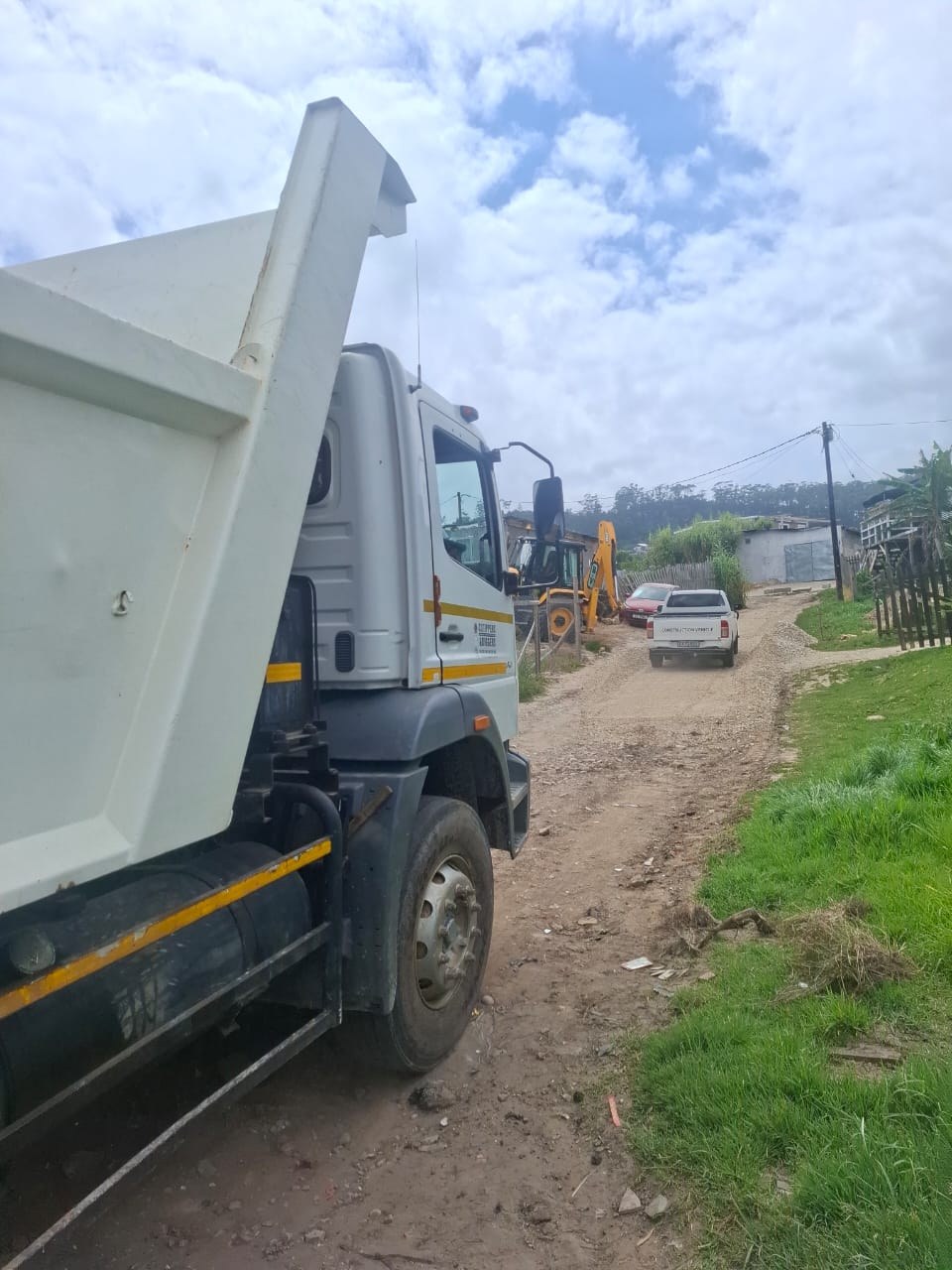
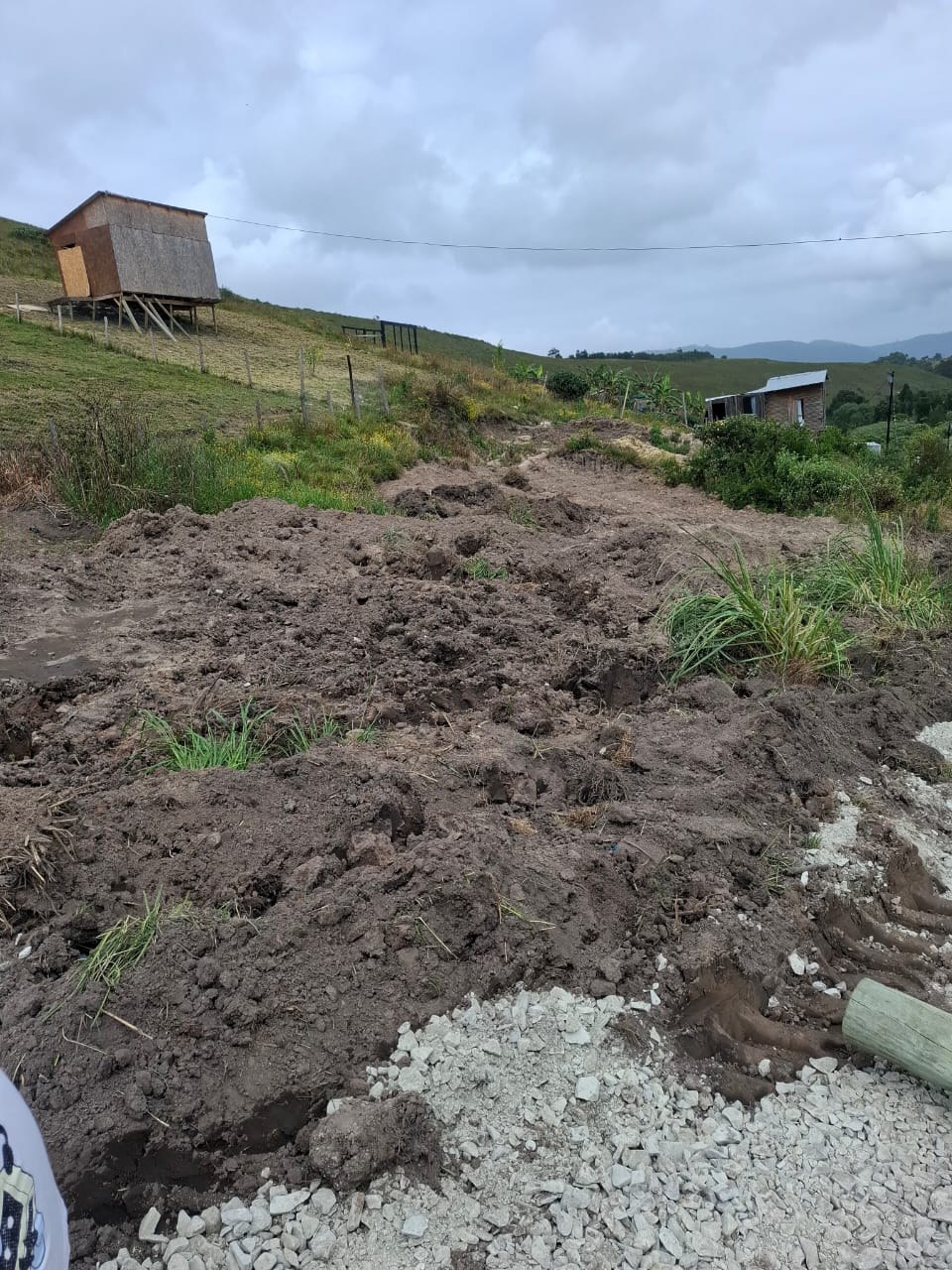
The party links that intervention to access: ambulances reaching a patient, police and fire vehicles responding to an emergency, deliveries reaching homes and taxis carrying passengers. It is a useful expression of the campaign’s argument. A road connects a household to work, services and the wider economy, making maintenance a matter of public safety as well as convenience.
The taxi industry belongs in Knysna’s economic future
UPPA’s transport-industry statement, issued on 1 November and published on 2 November, extends the governing argument into one of the sectors that keeps the town moving. It recognises local taxi owners, drivers, workers and commuters, naming Uncedo, Knysna Taxi Association, Garden Route Taxi Association and CODETA alongside other operators serving the community.
The statement, issued by national spokesperson and Tshwane mayoral candidate Abel Tau, places transport within the daily workings of the economy. Taxis connect people to employment, schools, healthcare and shops. The businesses at the destination depend on those journeys too, through the arrival of workers, customers and supplies.
UPPA also identifies the industry as a base of black ownership and enterprise. Its position connects the future of taxi businesses with the prospects of local entrepreneurs, workers and suppliers. Fuel costs and the condition of roads affect operators’ expenses and commuters’ ability to reach the places on which their livelihoods depend.
The engagement it proposes includes roads and ranks, lighting, sanitation, commuter safety and practical obstacles facing operators. Those are concrete points at which municipal responsibilities meet the working life of the transport sector. They give the campaign a route from listening to an industry to setting priorities for local government.
The same statement links the fortunes of transport to tourism, local trade and investment. UPPA’s economic offer is therefore broader than attracting a new investor: it includes improving the conditions for the people and enterprises already sustaining Knysna, while creating room for employment and growth.
The sixth priority: a town in which people can work
The final point of the plan concerns the local economy. UPPA proposes reducing red tape, supporting SMMEs and township enterprises, reviving commercial centres and attracting investment that creates jobs. It treats economic opportunity as part of the municipal task, alongside the services that enable a business to operate.
For a small enterprise, the municipality is encountered through accounts, permissions, trading conditions and the condition of the surrounding area. Reliable services and accessible processes help create a more predictable environment in which to invest or expand. The earlier priorities in the plan therefore feed directly into the last one: the quality of local government affects the possibilities for local enterprise.
UPPA’s invitation to Knysna business owners, professionals and other stakeholders for a leadership engagement also placed the local economy and unemployment on the campaign’s agenda. That engagement sits alongside its efforts to widen access to skills for residents seeking an opportunity to work.
In its training update, published on 31 October, UPPA announced 100 candidates selected for security training, with training and certificate costs covered. The announcement followed a gathering at Scorpion Security Training Centre in Knysna on 28 October. The intervention addresses a practical entry barrier: the cost of acquiring the training needed to pursue work in the sector.

This widens the campaign’s message beyond immediate relief. It speaks to the means by which people can improve their circumstances, through skills, enterprise and a functioning local economy. Municipal government has a role in making those possibilities easier to pursue; the training programme gives UPPA a practical example around which to develop that argument.
Relief, sport and culture are part of the same community life
The campaign’s household work also includes food support. UPPA’s community-care report documents food-parcel preparations and meals for matric learners during their final examinations. Photographs supplied to TPR show parcels being handed over outside homes and carried through residential streets.

These activities bring the campaign into contact with the immediate pressures on families. A meal supports a learner through an important school day; a parcel provides assistance at a household’s doorstep. UPPA places that work alongside its longer programme for services, skills and economic opportunity.
Sport provides another meeting point. The Knysna Launch Rugby Festival took place at Safe Hub in White Location on 24 and 25 October, bringing together players, officials, supporters and the volunteers the party calls FIXERS. It gave the campaign a presence in the sporting life of the community.
In its subsequent statement, UPPA set out an intention to extend that work through grassroots sport, recreation, indigenous games, culture and heritage. These are activities through which people develop skills, share traditions and participate in the life of a town. Accessible facilities and maintained public spaces give that participation room to grow.
A statement issued on 1 November, signed by campaign manager Trevor Louw, records a chair donation to support a church and its congregation. Like local clubs and cultural organisations, congregations sustain spaces in which people meet and organise community activity. UPPA presents the contribution as support for that continuing work.

Cultural recognition also runs through the transport statement. It announces a planned donation of two head of cattle to the taxi industry, explaining the gesture through traditions of respect, hospitality and goodwill. The party connects that recognition with equal dignity, respect for different communities’ heritage and continuing engagement on practical needs.
The wider campaign is taking shape through these relationships: with households, learners, sporting communities, congregations, transport operators and businesses. Together, they show the range of people and institutions with a stake in how Knysna is governed.
Turning an introduction into a governing offer
Knysna is one part of a broader electoral effort. In its 28 August nomination statement, UPPA identified contests in Tshwane, Capricorn, Polokwane, Molemole, Lepelle-Nkumpi, Nelson Mandela Bay and Knysna. It described a campaign built through door-to-door work, public meetings, service-delivery activity and listening to residents’ concerns.
The same statement challenges its candidates to remain visible and accessible before, during and after the election. That links the campaign’s method to the kind of representation it says it wants: councillors whose relationship with a community continues through the municipal term.
Will Fix It, UPPA’s publication, brings those strands into a single place. Its dated statements, newsletters, photographs and updates set out the programme and document the community activity around it. Readers can follow the rebuilding response, the skills initiative and the party’s positions on municipal governance through the original material.
In Knysna, the offer now spans household repairs, road access, transport livelihoods, skills and community life. The six-point plan connects that activity to the institution UPPA wants to lead: a municipality with the people, finances and systems to deliver dependable services and support economic participation.
An outright majority remains an ambitious request in a council shaped by coalition bargaining. UPPA is making it with a programme that begins with the institution, follows the money and reaches out into the streets, homes and businesses of the municipality. Its case is that a mandate to govern should be used to carry out that repair, with its leadership answerable for the result.
Sources and further reading
- UPPA national municipal programme
- Will Fix It: rebuilding after the fire, published 31 October 2026
- Will Fix It: community care and matric meals, published 31 October 2026
- Will Fix It: 100 candidates selected for security training, published 31 October 2026
- UPPA Knysna Launch Rugby Festival: event record
- UPPA rugby festival statement, issued 25 October 2026
- UPPA chair donation statement, issued 1 November 2026
- UPPA Knysna accountability statement, issued 6 October 2026
- UPPA nomination and accountability statement, issued 28 August 2026
- Will Fix It Issue 02, dated 30 October; published online 31 October 2026
- Leadership dinner invitation and published date correction
- Knysna Municipality: published council composition
- TPR Knysna candidate snapshot, source dated 16 September 2026
- ACCORD: Knysna coalition history
- Western Cape government: Knysna service-delivery recovery update, 22 April 2026
- Knysna council agenda, 10 February 2022: Grootboom’s community services appointment
- UPPA taxi-industry and local-livelihoods statement, issued 1 November; published 2 November 2026
Additional sources: campaign information and photographs supplied to TPR, including the wider housing and roof-repair programme and the Ward 11 road-work record.