

An intervention students refused
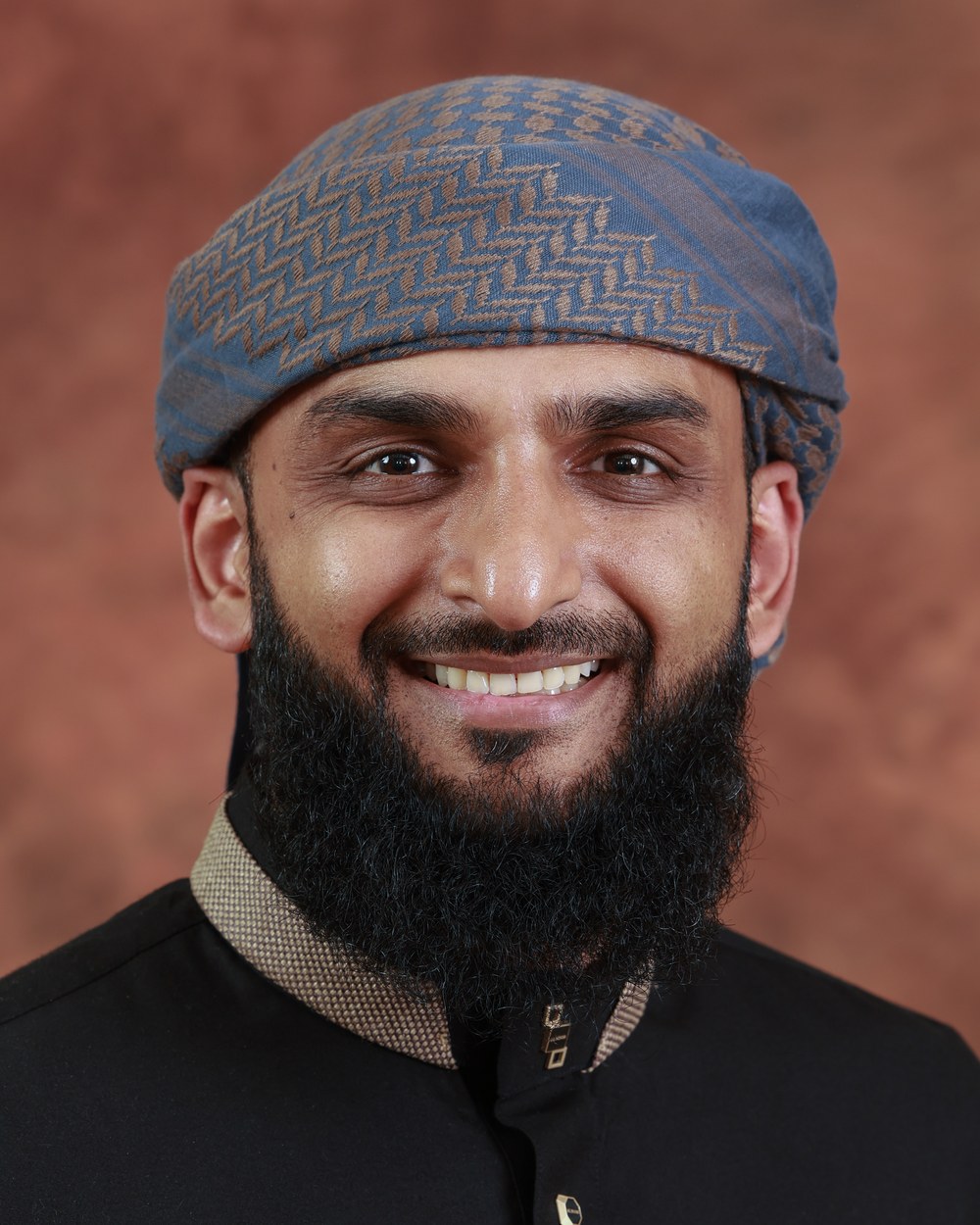
The proposed visit by Higher Education and Training Deputy Minister Yusuf Cassim to Nelson Mandela University has run into determined resistance from progressive student formations, who say the timing and political character of the engagement raise serious concerns about the integrity of the institution’s impending SRC elections.[1]
Their objection is direct.
A Deputy Minister with a long political history at Nelson Mandela University, and a well-known association with the Democratic Alliance and its student formation, was due to arrive on campus on Friday, 18 September, only days before the SRC election process is scheduled to begin on Monday, 21 September.[2]
For the Progressive Political Organisations, that is not a neutral diary arrangement. They regard it as an attempted political intervention in a campus election period.
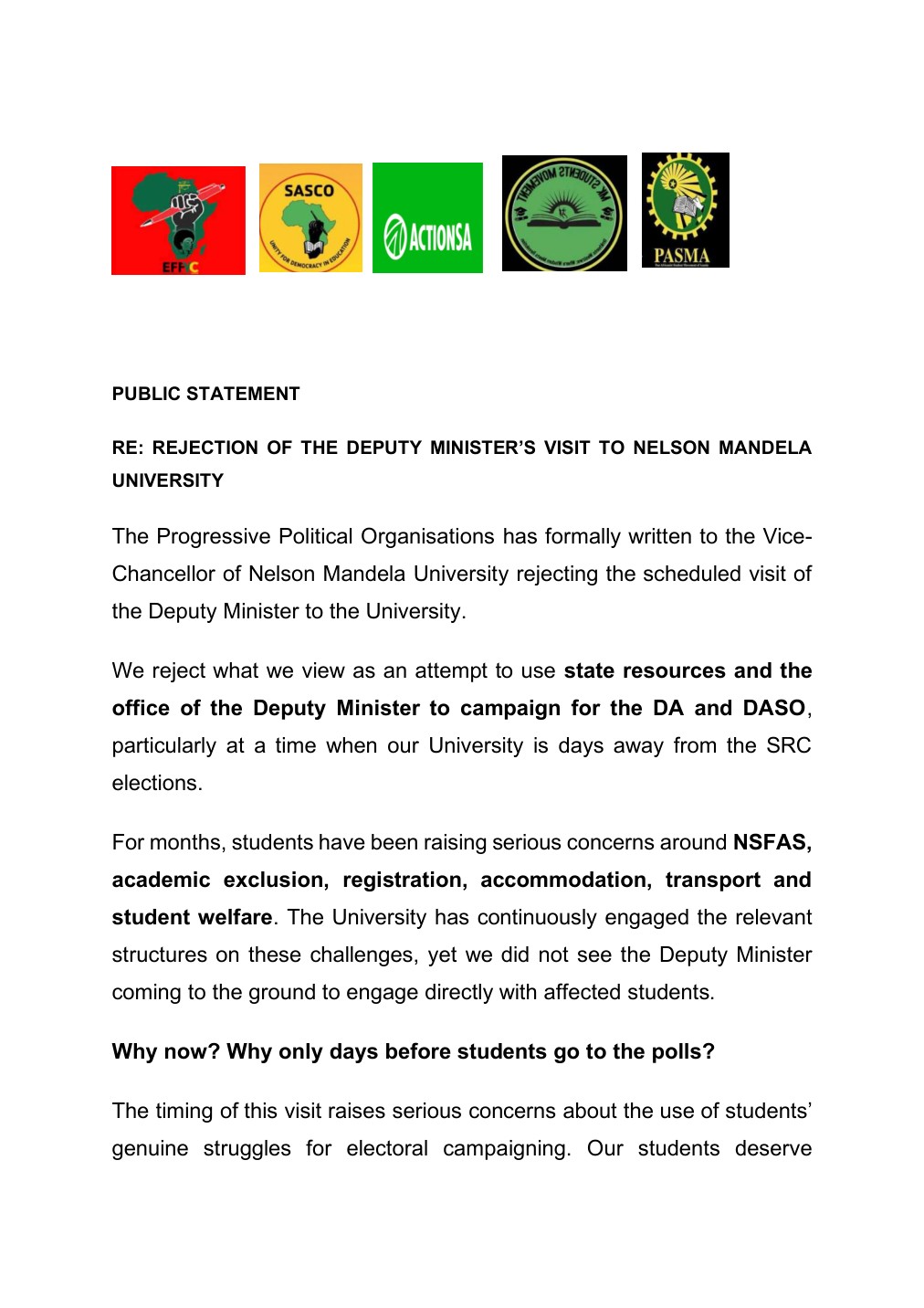
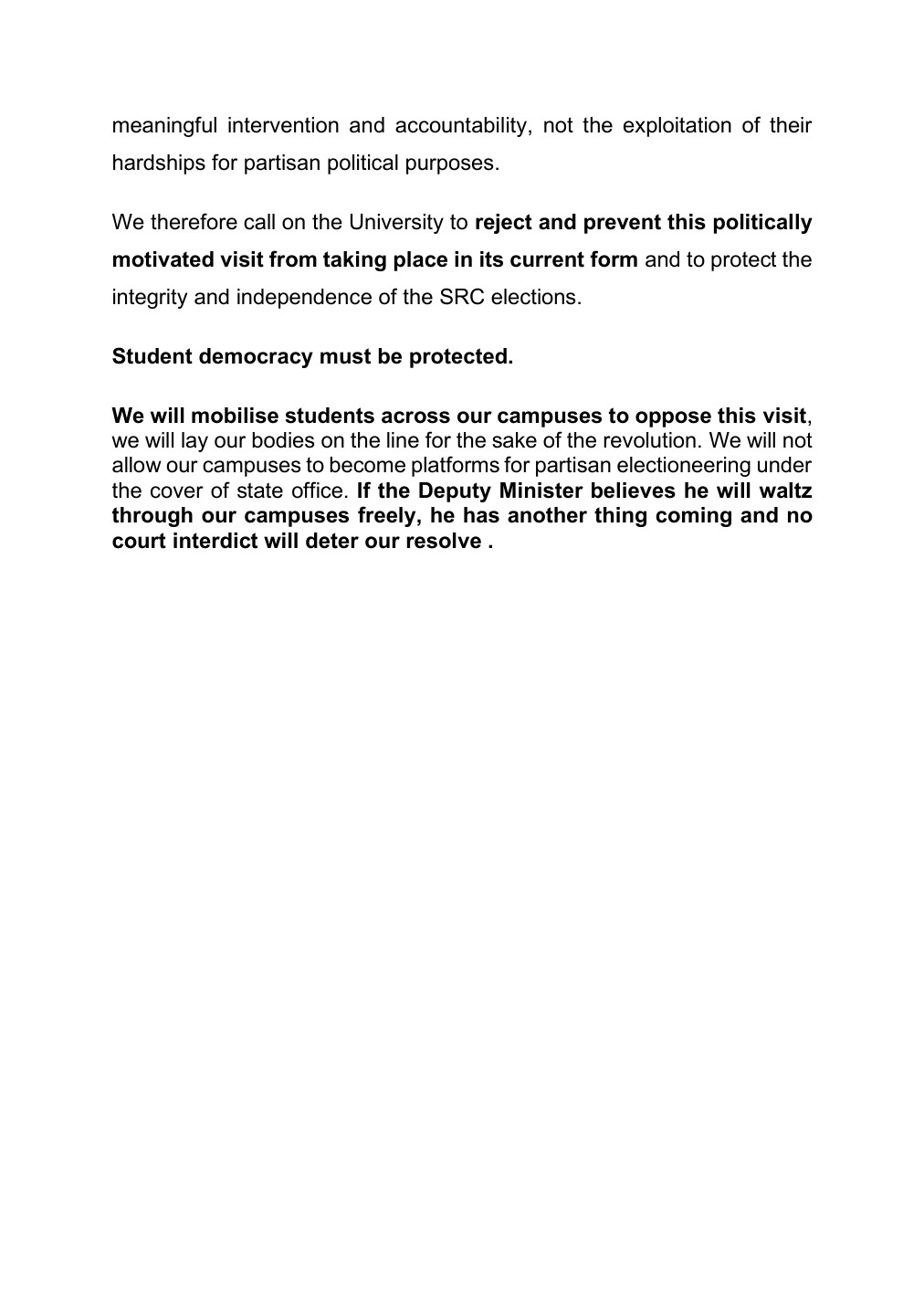
“Why now? Why only days before students go to the polls?” the formations asked in a public statement announcing that they had formally written to the university’s Vice-Chancellor.[1]
The question has become the defining issue in a dispute that has brought the university, the Deputy Minister’s office and student formations into open conflict.
The student formations say they have formally rejected the planned visit and called on university management to prevent it from proceeding in its proposed form.
Their statement alleges an attempt to use state resources and the office of the Deputy Minister to campaign for the DA and the Democratic Alliance Student Organisation (DASO) at a time when the university is days away from SRC elections.[1]
The formations say students have for months raised persistent concerns about NSFAS, academic exclusion, registration, accommodation, transport and broader student welfare.
Their criticism is not that these questions do not require ministerial attention.
It is that they have required ministerial attention for months.
The statement says the university has continuously engaged the relevant structures, but that the formations had not seen the Deputy Minister coming to the ground to engage directly with affected students.[1]
Instead, the proposed engagement was scheduled just as the campus entered an SRC election period.
That sequence has produced the political conclusion the formations are drawing: the visit was not merely about student welfare. In their view, it was intended to shape the political environment in which students are preparing to elect their representatives.
The formations have called for mobilisation against the visit and said student democracy must not be compromised. Their statement also takes a confrontational position, declaring that they would “lay our bodies on the line” and that “no court interdict will deter our resolve”.[1]
The political record matters
Cassim’s proposed return to Mandela University cannot be understood as an ordinary government visit.
He is a former student leader at the institution and a senior DA politician whose political rise is closely connected to campus politics. The university identifies him as a BCom graduate, its 2012 SRC president and a founder of DASO at the institution. DHET’s official biography records that he founded the campus organisation in 2009 and serves as the DA’s Eastern Cape provincial chairperson.[3][8]
DASO has also openly celebrated its position in student politics at Mandela University. In its account of the 2024 election, the DA said DASO won 34 of 43 SRC seats, took four of the five campuses contested, obtained five of the nine Central SRC seats and secured representation in all seven faculties.[4]
The party’s subsequent statement on the 2025 election reported 31 of 43 seats and again linked campus success to its wider political fortunes. It said momentum was building “across South Africa, on campuses, in Wards, Municipalities and Provinces.”[5]
That is precisely why the proposed visit has been viewed with suspicion.
The Deputy Minister is not being accused of arriving at a politically empty campus. He was expected to enter a university where student elections are fiercely contested, where DASO has an established electoral interest and where the DA itself has previously linked campus outcomes to its broader political expansion.
The appearance of neutrality becomes difficult to sustain when the public office-holder has a direct political relationship with one side of a live student contest.
A visit at the decisive moment
Nelson Mandela University says it was first notified of the intended visit on 11 September, seven days before the visit, leaving it approximately four working days, excluding the weekend, to accommodate the programme.[2]
The proposed programme would have extended over two campuses, included weekend activities and contemplated the mobilisation of a potentially large number of students.
The university says the programme coincided with the commencement of the SRC election process on Monday, 21 September.
It also says management had to consider safety, health, security, academic continuity, governance obligations and longstanding institutional commitments, including preparations for a scheduled Council meeting.[2]
These are not minor administrative concerns.
A large gathering at a university in the final days before an SRC election has consequences. It can change the public atmosphere, shift media attention and create an unequal platform. It can turn the language of service delivery into political theatre.
The university’s account confirms the scale and timing that gave rise to the student formations’ objection.
The institution says the programme could have mobilised thousands of students. It says the visit was proposed as the university was preparing for a highly contested election process. It says the plan involved multiple campuses and a compressed planning period.[2]
The question is not whether a Deputy Minister has a right to perform official duties.
The question is whether the office of Deputy Minister should be used in a way that carries an obvious political benefit during a contested campus election.
The university’s contradictions
The university has sought to present itself as a neutral institution balancing competing responsibilities.
Its response records the Deputy Minister’s office accusing management of refusing “to recognise and collaborate” in hosting the visit and of changing its position after initially supporting it, citing what the office described as “alleged” security concerns.[2]
The university disputes that account. It says it acknowledged and welcomed the proposed visit and has historically facilitated engagements by the department, government officials, political parties and political leaders.
It says that, after the initial acknowledgement, internal consideration of the arrangements identified emergent concerns through a security assessment, which was shared with the Deputy Minister’s security detail.[2]
It also says it did not decline the visit. Its recorded response, according to the statement, was that it had neither the entitlement nor the inclination to prevent or decline an official ministerial visit.
Instead, it proposed that the visit proceed under an arrangement allocating responsibilities and liabilities, or that it be rescheduled to manage the identified risks. The university says those alternatives were not accepted.[2]
That explanation is welcome as far as it goes.
But it does not dispose of the central political concern raised by student formations.
The university acknowledges the proximity of the SRC elections, the possibility of mass student mobilisation, the safety and governance risks and the potential implications for the academic programme. Its duty is not merely to allocate liabilities once difficulties emerge. It is to protect the conditions for a credible SRC election.
The institution distinguishes official engagements from party-political programmes, for which parties ordinarily assume the associated responsibilities. That distinction must also be meaningful in practice, particularly when an office-holder has close ties to a formation contesting the election.
The university should therefore not allow the matter to be presented only as a technical disagreement about notice periods or security arrangements.
The issue is political neutrality.
Public office cannot be campaign machinery
Cassim is entitled to engage students. The Department of Higher Education and Training is obliged to respond to the crisis facing students, particularly on NSFAS, access, registration and student welfare.
Cassim assumed office on 1 July 2026, according to the university’s announcement.[3]
There is also a documented record of intervention concerning Mandela University students before the proposed September visit. SAnews reported on 17 July that, following Cassim’s engagement with the NSFAS administrator, the scheme committed to urgently resolving cases affecting more than 400 Mandela University students enrolled in extended programmes and to conducting a visit to the institution.[6]
Those commitments did not settle the question now raised by the formations: why a mass engagement should take place immediately before an SRC election.
Cassim also visited Tshwane University of Technology on 9 September to discuss funding freezes, data mismatches, delayed approvals and other NSFAS payment bottlenecks with university management, NSFAS and student leadership.[7]
Official responsibilities, however, cannot be separated from political conduct simply by attaching a government label to an event.
A state visit must be judged by its timing, programme, audience, format and effect.
At Mandela University, the proposed engagement was due to take place days before the SRC election process, at an institution where the Deputy Minister has a political history and where DASO’s electoral fortunes have been publicly linked to the DA’s wider ambitions.
The student formations have therefore raised a legitimate concern: public office cannot become campaign machinery.
The responsibility rests with the Deputy Minister’s office to demonstrate that its programme serves students without privileging a party-political campaign.
That requires more than an assurance. It requires conduct that protects the electoral environment.
A simple remedy
The solution is neither complicated nor unreasonable.
The proposed visit should be rescheduled until after the SRC elections.
The Deputy Minister should then return for a properly constituted engagement that includes student formations, university management, NSFAS representatives and students affected by funding, registration, accommodation, transport and exclusion crises.
The agenda should be published beforehand.
The engagement should produce clear undertakings, timelines and named officials responsible for follow-through.
There should be no party-political branding, no selective audience and no political messaging that privileges one student formation over another.
That is how a Deputy Minister demonstrates that he has come to solve problems rather than harvest a political moment.
The university has already said it proposed rescheduling as one option. That remains the responsible course.
Students have read the moment correctly
The Progressive Political Organisations have raised a question of substance: the difference between debate and the use of public office to tilt a political contest.
Why should a Deputy Minister with a deep political connection to one side of campus politics arrive at precisely the point when students are preparing to elect their leadership?
The existence of genuine student-welfare problems does not, on its own, settle whether a mass engagement immediately before an SRC election is the appropriate response.
Students facing NSFAS uncertainty, exclusion, delayed registration and accommodation pressures need accountable government. They need direct intervention before their crises become a convenient backdrop for political messaging.
They deserve a Department of Higher Education and Training that arrives when the problem begins, remains when the cameras are gone and returns with solutions.
Protect the vote
The SRC election must proceed in an atmosphere free from undue political influence.
That does not mean student formations should be denied their right to campaign, organise, debate and persuade. Student politics is political by definition.
It means state power must not be inserted into the contest in a manner that advantages a formation with historical and organisational ties to the Deputy Minister.
The university must protect its students, uphold the independence of the election and refuse to become a venue for a state-assisted campaign.
The Deputy Minister should respect that obligation.
The students have asked, “Why now?”
The answer is written in the timing.
Let students vote.

Sources and further reading
- Progressive Political Organisations: public statement rejecting the visit (complete two-page PDF) (opens in a new tab)
- Nelson Mandela University management response, issued by the Division for Communication and Marketing (supplied text)
- Nelson Mandela University: Cassim’s appointment and student leadership record, 3 July 2026 (opens in a new tab)
- DA Eastern Cape: 2024 SRC result, 34 of 43 seats (opens in a new tab)
- DA Eastern Cape: 2025 SRC result, 31 of 43 seats (opens in a new tab)
- SAnews: Cassim’s NSFAS engagement and Mandela University commitments, 17 July 2026 (opens in a new tab)
- Tshwane University of Technology: NSFAS payment bottlenecks, 11 September 2026 (opens in a new tab)
- DHET: official biography and portrait of Deputy Minister Yusuf Cassim (opens in a new tab)
Related reading: The case of the post-colonial higher education sector in South Africa.