
Africa & world · COP31 finance negotiations
COP 31’s first draft puts climate finance on the table, with no agreement yet
As ministers take over key talks, the question for African communities is what finance would actually become available, on what terms and by when.

Share-image credit and reuse
Share card: the same photograph resized without cropping or retouching, with TPR headline and branding added. Photo adaptation: CC BY-SA 4.0 (opens in a new tab).
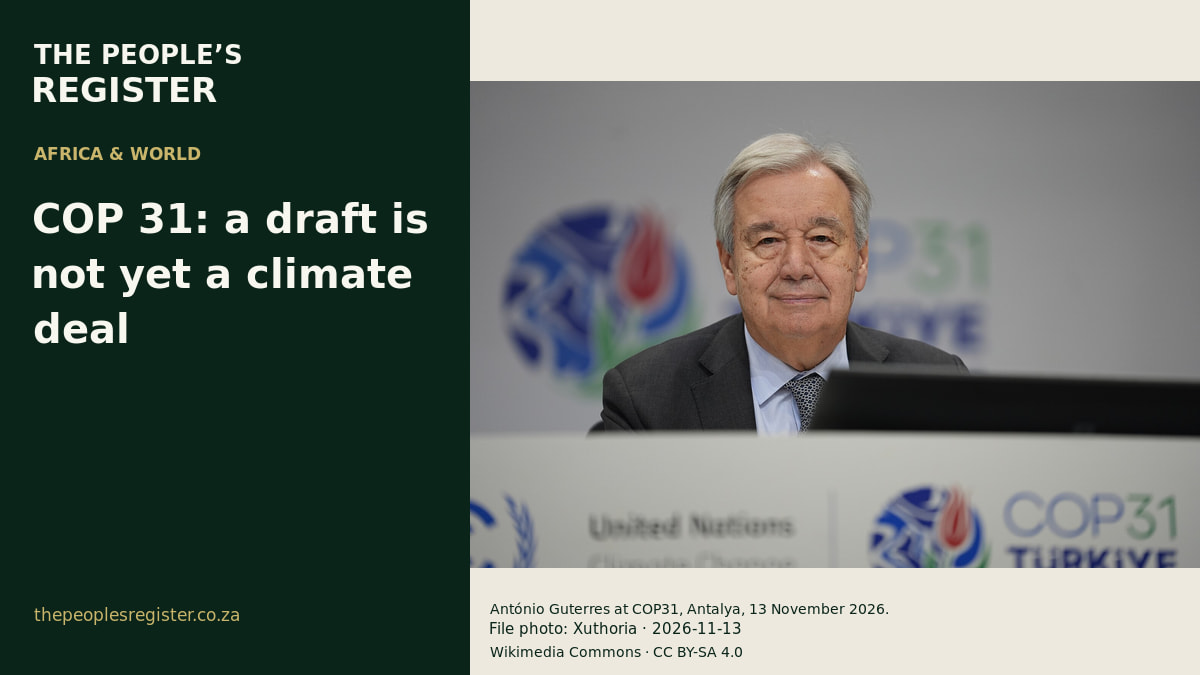
The first proposed overarching decision at COP 31 contains promises on climate finance, energy and adaptation. It is still a negotiating document. The Presidency’s accompanying note (opens in a new tab) says the draft gathers competing positions, including proposals some countries oppose. Even text without brackets remains open to removal or revision.
The proposed sums remain subject to negotiation. Even an agreed commitment would still need to become contributions and finance that affected countries and communities can access.
What is being negotiated
The 16 November draft (opens in a new tab) calls for faster action on energy transition and recognises barriers developing countries face in securing climate finance. These include borrowing costs, debt pressures, difficult access conditions and limited public resources. It also includes language supporting grants and highly concessional finance for adaptation, alongside proposals on clean energy access and stronger electricity systems.
These issues cannot be reduced to a single global headline number. Funding a drainage system that protects a settlement raises a different repayment question from financing an electricity project with a revenue stream. The terms determine whether a community gains protection while its government acquires another debt obligation.
The official consultations register (opens in a new tab) records ministerial discussions on finance, adaptation, mitigation and just transition on 17 November. Finance consultations were assigned to representatives of France and the Philippines; adaptation discussions to Sierra Leone and the United Kingdom. These are separate negotiating streams, even when their outcomes will need to fit together.
Who pays, and how the money is counted
The Earth Negotiations Bulletin’s report (opens in a new tab) describes disagreements over a finance text recognising increased flows while acknowledging that they remain below needs. Delegations also differed over references to South-South finance and whether wording should refer broadly to finance providers or specifically to developed-country parties. Those choices affect how responsibilities are described.
For an African reader, three practical questions are useful as the text changes. Does it identify who must provide resources? Does it distinguish grants from loans and new money from existing commitments? Does it set a route through which public bodies and communities can actually obtain support? Ambition written without those details is difficult to hold anyone to.
The Presidency has invited governments to seek convergence, but its note is clear that the eventual outcome requires consensus. Governments are still contesting the terms of a possible agreement. Reaching a final decision, securing contributions and getting money to recipients remain separate steps.
Sources, evidence and corrections
- COP31 Presidency note explaining the status of the first draft (opens in a new tab)
- UNFCCC: first COP31 cover-decision draft, 16 November (opens in a new tab)
- UNFCCC: Presidency and ministerial consultations (opens in a new tab)
- IISD Earth Negotiations Bulletin: COP31 negotiations report (opens in a new tab)