
News Analysis · Elections 2026 · Youth participation · Voter data
Did young voters turn out? Registration figures cannot answer that yet
The IEC recorded 485,757 registration transactions among 16–29-year-olds, but has not released their actual 4 November turnout. Here is what the figures show.
Youth participation was a central feature of the political contest before the 4 November municipal election. Parties promoted first-time voters, student activists and younger candidates, while the Electoral Commission reported notable registration activity among people under 29.
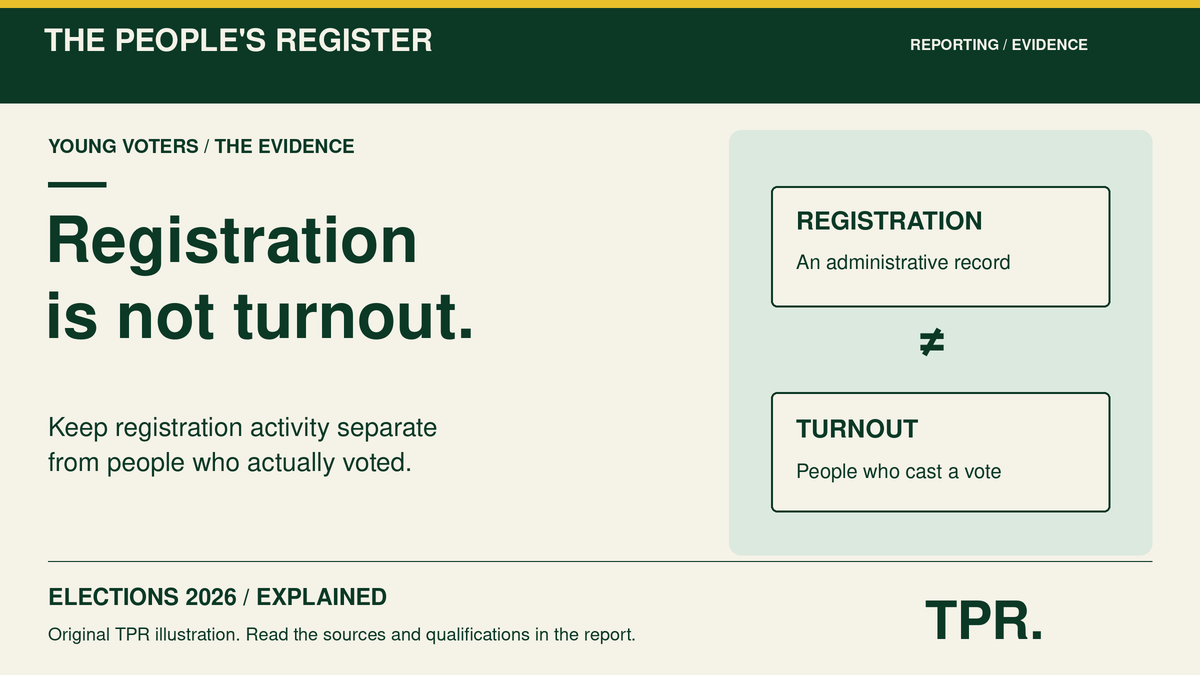
But there is a basic evidence problem with claims circulating on the morning after the vote: new registrations are not the same thing as ballots cast. The Electoral Commission said on Thursday that it could not yet provide the final voter participation breakdown, including the number of young and first-time voters, until the count was concluded.
What the registration data actually shows
In its 3 August registration update, the IEC reported 485,757 transactions involving people aged 16 to 29 and said 46% of new registrations were by people under 29. Those measures describe registration activity in the relevant period. A transaction is not necessarily a distinct new voter, and a person aged 16 or 17 may register but cannot vote until eligible under the rules.
The Commission's figures are nonetheless a useful starting point for studying civic engagement. They show young people were present in registration campaigns. They do not establish their 4 November turnout, which party they backed or how many first-time voters cast ballots.
Participation cannot be reduced to a slogan
The substantive questions extend beyond who attracted young people to a rally. Did young residents find their voting station? Were accessible transport and accurate voter information available? Could students and employed young voters vote without undue obstacles? Are elected councillors prepared to account for jobs, housing, public transport and municipal opportunities after the election?
The eventual IEC age breakdown will help answer some participation questions. It will not, by itself, explain political motivation. That requires careful research and clear distinctions between surveys, administrative data and direct voter testimony.
What to watch for in the final release
A valid comparison needs turnout and registration figures for the same age group, with clear definitions of new registrations and actual votes. Selected campus interviews and widely shared clips cannot establish the national picture.
Young people have a stake in local government long after the count. Their participation should be measured properly and their demands tracked through the term of the new councils.
Reporting scope: Registration transactions, new voter registrations, registered under-18s and ballots actually cast are distinct populations.
For the current official record, visit the Electoral Commission’s results service. TPR distinguishes recorded data, official declarations and unverified allegations.
Sources, evidence and corrections
- IEC final registration weekend update, 3 August
- IEC 5 November briefing: demographic turnout pending
- Parliament on youth voter registration
Evidence reviewed for publication on 5 November 2026. Source status and numerical results may subsequently change.