
Tribute · In memory of Ngawonke Bulala
Tribute to Comrade Ngawonke Bulala
A comrade remembered through his convictions, his humour and his service, from the student and worker struggles of Fees Must Fall to the people of Mhlontlo.
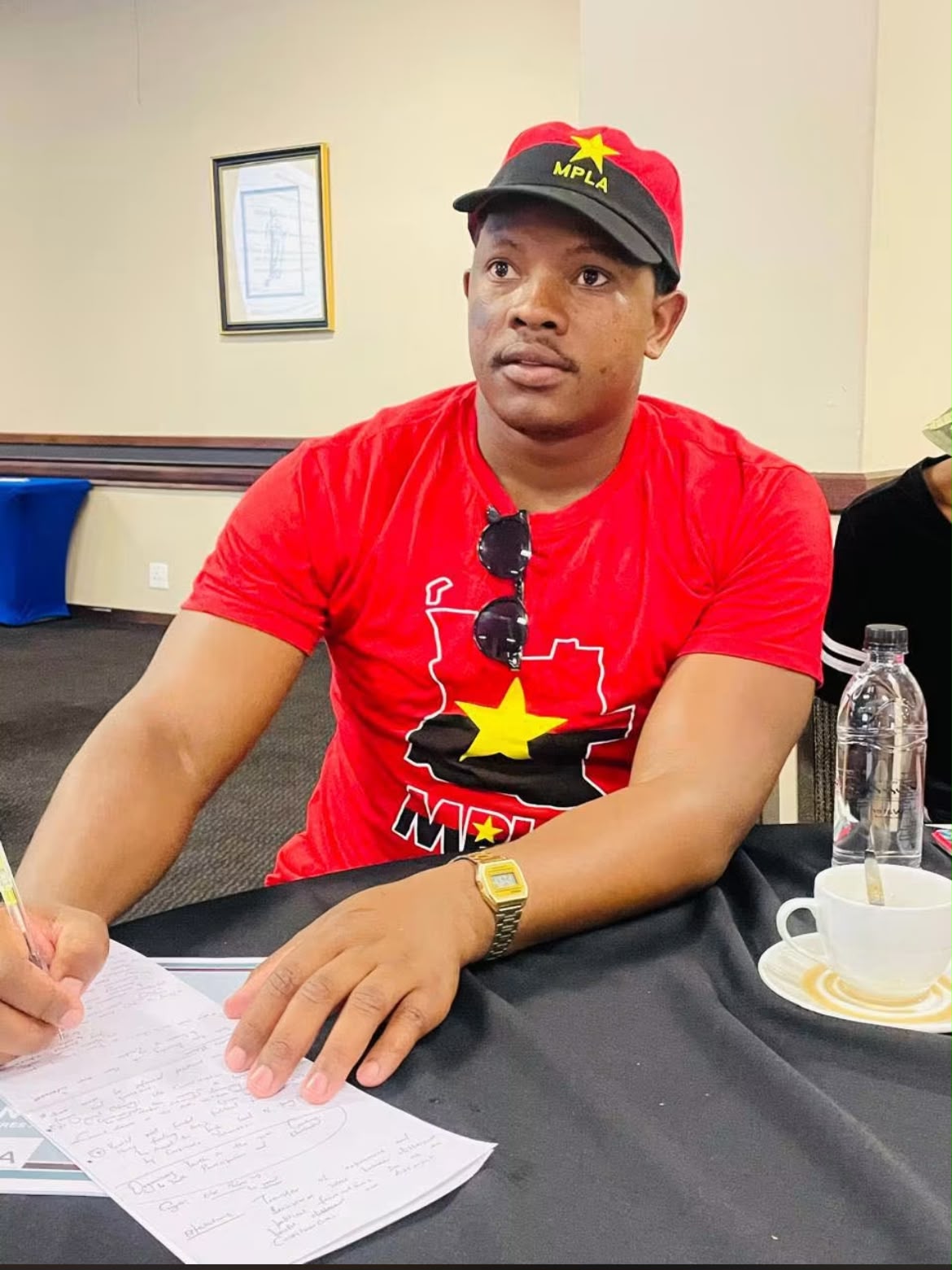
Ilanga litshonile. The sun has set.
Iqhawe alifi. A hero never dies.
Indlela ibuzwa kwabaphambili. The way is asked of those who walked ahead.
Umntu ngumntu ngabantu. A person is a person through other people.
Usishiyile, Qabane, kodwa umzabalazo uyaqhubeka. You have left us, Comrade, but the struggle continues.
Lala ngoxolo, nyana womhlaba. Rest in peace, son of the soil.
We begin in the language of his home, the language of Mhlontlo, because that is where Ngawonke chose to return and serve. He walked ahead of many of us. Now it is from his road that we must learn the way.
To the Bulala family; the leadership of the South African Students Congress; comrades of the Progressive Youth Alliance, the ANC Youth League, the Young Communist League and COSAS; the leadership of the ANC, the SACP and COSATU; the broader Mass Democratic Movement; the Nelson Mandela University community; and the workers, students and people of Mhlontlo:
I write not merely to mourn, but to reaffirm. We gather to remember a comrade, to stand with those who loved him and to pick up the spear he carried. The struggle to which he gave so much must not die with him.
Comrade Ngawonke Bulala was 35 years old. On 13 June 2026, he was seriously wounded in the Qumbu shooting that killed his comrade Wonele Gontshi. He fought for his life for more than three months, and in October 2026 that young heart finally stopped.
His passing leaves a family bereaved, a community wounded and comrades struggling to accept that a familiar voice will no longer answer. We remember the convictions he carried, the work he undertook and the person whose laughter could change the mood of a difficult meeting.
A Cadre Forged in the Furnace of Struggle
Revolutionaries are not born; they are made. They are shaped by material conditions, by the contradictions of the society they inherit, and by the organisations that give their anger direction and discipline.
Ngawonke was a child of a society still scarred by colonialism of a special type. The doors of learning had been opened in law, but poverty kept them half-shut. When he arrived at what was then Nelson Mandela Metropolitan University, he found that the university was not a neutral space. It was a site of class struggle, where fees, debt and financial exclusion continually confronted the children of the working class and the rural poor.
He found his political home in the South African Students Congress, an organisation that understood the struggle for education to be inseparable from the struggle for socialism. SASCO taught him what it has taught generations of cadres: education is a right, not a privilege; the student movement must stand with the working class; and Marxism-Leninism is a guide to action, a tool for analysing society in order to change it.
In SASCO, Ngawonke learnt the discipline of democratic centralism: debate freely, decide collectively, implement in unity. He learnt the revolutionary habit of criticism and self-criticism. He learnt that a cadre’s first loyalty is to the people, never to personal ambition.
When the Fees Must Fall uprising erupted nationally in October 2015, the contradictions of post-apartheid higher education burst into the open. From Wits to Rhodes, from UCT to our own campus in what is now Gqeberha, students said with one voice: enough.
Ngawonke stood in the front trenches of that battle at NMMU, a SASCO leader in a moment of historic mobilisation. In the struggles of 2015 and 2016, he organised in the residences, addressed mass meetings and negotiated with management. He carried the demand for free, quality, decommodified education for the poor.
The worker struggle was part of that same fight. The demand to open the doors of learning stood alongside the demand to end outsourcing and restore dignity to those who cleaned the lecture halls, guarded the gates and kept the university running. Students and workers recognised a common struggle against exclusion, insecure work and poverty. That solidarity gave living meaning to the connection between SASCO and the broader working-class movement.
At NMMU, the university’s April 2016 InTouch publication recorded the practical gains following a Council decision in November 2015: workers employed by contracted companies received a top-up to a minimum of R5,000 cost to company; the university committed to reintegrating them as its employees; and 826 workers gained staff study benefits and access to clinic services. These gains form part of the collective student-worker history within which we remember Ngawonke’s political formation.
Here we must remember something that set him apart. At the height of the protests, when emotions ran high and some resorted to intimidation, Ngawonke said openly that no student should be coerced into striking. This was revolutionary maturity. He understood that you cannot liberate the masses by bullying them. A movement wins through political education and persuasion, never through fear. He held firm to the principle that our methods must reflect the society we are fighting to build.
As Amílcar Cabral taught us: tell no lies, claim no easy victories. Ngawonke told students the truth. Fees Must Fall would not be won in a week; it would take organisation, unity and sustained struggle. The road he helped to build must remain open to those who come after him.
The Negotiator Who Loved a Good Argument
Those who stood with Ngawonke during Fees Must Fall will tell you that he loved negotiation the way some people love football. He believed that no table was too hostile and no comrade too stubborn to be talked to. Where others saw a deadlock, he saw a conversation that had not yet ended.
In 2015, the student movement on our campus was not one organisation but many: student formations from across the political spectrum, residence committees, societies and independent students, some of them with politics far from ours. Ngawonke understood that management would feed on our divisions, and that a divided student body would be defeated one formation at a time.
So he worked the corridors, the residences and the late-night caucuses, sitting with comrades from rival organisations until the early hours of the morning. He was not trying to win them to SASCO. He was trying to win them to the struggle. For Ngawonke, uniting student formations behind a common demand served the interests of the revolution.
And yet, comrades, we must be honest about our Ngawonke. He loved to win an argument. When a debate was going his way, he was the most patient and democratic comrade in the room. But when he sensed that he was losing, he had one final weapon. He would lean back, lower his voice and remind everyone, especially the younger comrades, that they were speaking to iMpondomise.
“Ndilimpondomise mna and ndimdala,” he would say, as if that settled the matter. When logic ran out, seniority was summoned.
The room would erupt in laughter, the tension would break, and somehow the discussion would find its way to a resolution. Even this was a kind of genius. Ngawonke knew when a meeting needed a vote and when it needed a laugh.
We will miss the negotiator. We will miss that stubbornness, that warmth and that pride in his amaMpondomise identity. Most of all, we will miss the comrade whose presence made the long work of organising a little lighter.
A Builder of the Progressive Youth Alliance
Ngawonke understood the strategic importance of the Progressive Youth Alliance. SASCO, the ANC Youth League, the Young Communist League and COSAS are not rival camps. They are detachments of one army: the youth formations of the National Democratic Revolution.
He fought factionalism wherever he found it. He knew that division in our ranks is a gift to the class enemy, and that every hour spent fighting one another for positions is an hour stolen from the struggle against poverty, unemployment and inequality. He worked tirelessly to build unity in the PYA, even when unity was unpopular and the easier road was to pick a slate.
After his student years, he carried this outlook into the ANC Youth League, where he became one of its leaders in the Eastern Cape. His comrades remember him as a fearless young activist and a dedicated fighter for free education and the economic freedom of young people.
He never forgot the lesson of SASCO: the Alliance of the ANC, the SACP, COSATU and SANCO, together with the progressive youth formations, must serve the working class and the poor in carrying the democratic revolution forward.
An Organic Intellectual and a Builder of Communities
Antonio Gramsci’s idea of the organic intellectual helps us to understand what Ngawonke’s life meant: knowledge and skill rooted in the struggles of the people, placed at their service rather than used to leave them behind.
He graduated with a Bachelor of Pharmacy on 11 April 2017. Our society teaches young professionals to treat a qualification as a ticket out: out of the village, out of the township, out of the struggle and into private comfort. Ngawonke refused that individualism and placed his knowledge at the service of the people.
He showed a generation of SASCO graduates that the end of a degree is not the end of activism. It is a new front in the same struggle.
Above all, Comrade Ngawonke was a builder of communities. He did not see politics as speeches from podiums or positions on lists. He saw it as patient, daily work among the masses.
He went home to Mhlontlo and gave himself to its people. He was dedicated to developing the young people of his community, opening doors for others as the movement had opened doors for him. He believed that service must happen where it matters most: at the grassroots, in the branches, in the villages, among the people.
As elections manager of the Mhlontlo Local Elections Team, he was the organiser behind the organisers. He mobilised branches, built structures and prepared the ground for the people’s victory. And the people recognised him. He became the ANC’s candidate for Ward 14 in the local government elections of 4 November 2026.
He was preparing to take the work of the movement into the council chamber and help turn the promises of the Freedom Charter into water, roads, clinics and jobs for his people. That possibility, and all that he still had to give, makes his loss harder to bear.
An Attack That Wounded the Movement
The killing of a comrade engaged in the work of his community wounds the democratic movement. Ngawonke and Wonele should have been able to organise, serve and return safely to their families. Their deaths have left grief where there should have been years of life and work ahead.
The motive and those responsible have not been established in the public accounts available at publication. Our demand is clear: the South African Police Service must act with speed and seriousness, establish the truth and bring those responsible before the courts.
We demand justice for Ngawonke, for Wonele and for their families. We will not allow fear to empty our branches, silence our communities or rob people of the right to choose their representatives.
In the spirit of self-criticism, we must also turn the mirror on ourselves. Where the battle for positions in our own ranks has become a battle for tenders and patronage, we have betrayed the meaning of service. Honouring Ngawonke means rooting out that rot, so that leadership once again becomes a sacrifice and not a business opportunity.
“We Will Still Vote for Him”
Comrades, there is a powerful lesson in the response of people in Ward 14. On 22 October 2026, the Daily Dispatch reported that residents remained determined to vote for Ngawonke, whose name was still on the finalised ballot.
Think about what that means. A community facing the loss of its candidate still speaks of the confidence it placed in him. It remembers the organiser, the pharmacist and the young man who came home to serve. That trust is among the highest tributes a community can pay to its builder.
History is made by the masses. Ngawonke’s example lives in the people he worked with and in those who will carry their community’s hopes forward.
In 1819, after the Peterloo massacre in Manchester, Percy Bysshe Shelley wrote words that speak to the courage we need today:
Rise like Lions after slumber In unvanquishable number Shake your chains to earth like dew Which in sleep had fallen on you Ye are many, they are few. Percy Bysshe Shelley, The Masque of Anarchy (1819)
To the Bulala Family
To the Bulala family, we bow our heads. You gave the movement a son whose work touched the lives of students at NMU, young people in Mhlontlo, and working-class and poor communities across our province.
We know the movement often took him from your home. Now you must live with an absence no organisation can fill. We cannot carry your pain for you, but we pledge to carry it with you.
Before we speak of his legacy, we must honour your grief. You knew the person behind the public responsibilities: the familiar voice, the laughter, the hopes and the ordinary moments that made him yours. Those memories belong to you, and we hold them with respect.
You must not walk alone. The SASCO family, the PYA and the Alliance owe you solidarity that continues after the messages of condolence and the public gatherings. Our care must be present in the days ahead.
We remember Wonele Gontshi’s family alongside you. May both families find strength in the love of those who stand with them, and may the truth and justice for which they wait be pursued with the seriousness they deserve.
Our Revolutionary Pledge
Our tears must be accompanied by discipline, unity and work. To honour Comrade Ngawonke, we pledge:
We will intensify the struggle for free, quality, decommodified education until no child of the working class is excluded for lack of money, accommodation or food.
We will defend the unity of the Progressive Youth Alliance and reject factionalism, slates and the politics of the stomach.
We will rebuild our branches as centres of service, not patronage, and restore revolutionary morality to our movement.
We will fight political violence and demand justice for Ngawonke, for Wonele, and for every comrade murdered for serving the people.
We will go to the polls on 4 November 2026 and defend, without fear, the right of the people to choose their own leaders.
We will produce more Ngawonkes: young cadres who study, qualify and return their knowledge to the people.
Ngawonke lived with the people, struggled with the people and gave himself to their service. Now it is our duty to ensure that he lives on with all of us: in every SASCO branch meeting, in every student who registers without fear of exclusion, in every worker whose dignity is defended, and in every young person in Mhlontlo who decides that their community is worth building.
They have taken his life. They cannot take his ideas, his example or his revolutionary spirit.
Comrade Ngawonke Bulala, your spear has fallen. We pick it up.
Lala ngoxolo, Qabane. Rest in revolutionary peace.
Education is a right, not a privilege!
Phambili ngomzabalazo, phambili!
Expanded on 26 October 2026, with the fuller tribute and contributor biography.
Sources and further reading
- ANC Eastern Cape: Qumbu shooting and elections-team roles, 14 June 2026
- The Coastal: report on Bulala’s death and the police investigation, 7 October 2026
- NMMU InTouch: November 2015 decisions, worker remuneration and benefits, April 2016
- University Health Sciences graduation programme, 11 April 2017
- The Presidency: local government election date, 15 September 2026
- Daily Dispatch: Ward 14 community support and ballot position, 22 October 2026