
Africa & world · Nigeria enterprise and agricultural finance
AfDB approves US$102m Nigeria finance package, with access terms still the key test
Different instruments make up the headline amount. The public should be able to trace what reaches borrowers and whether the promised opportunities follow.

Share-image credit and reuse
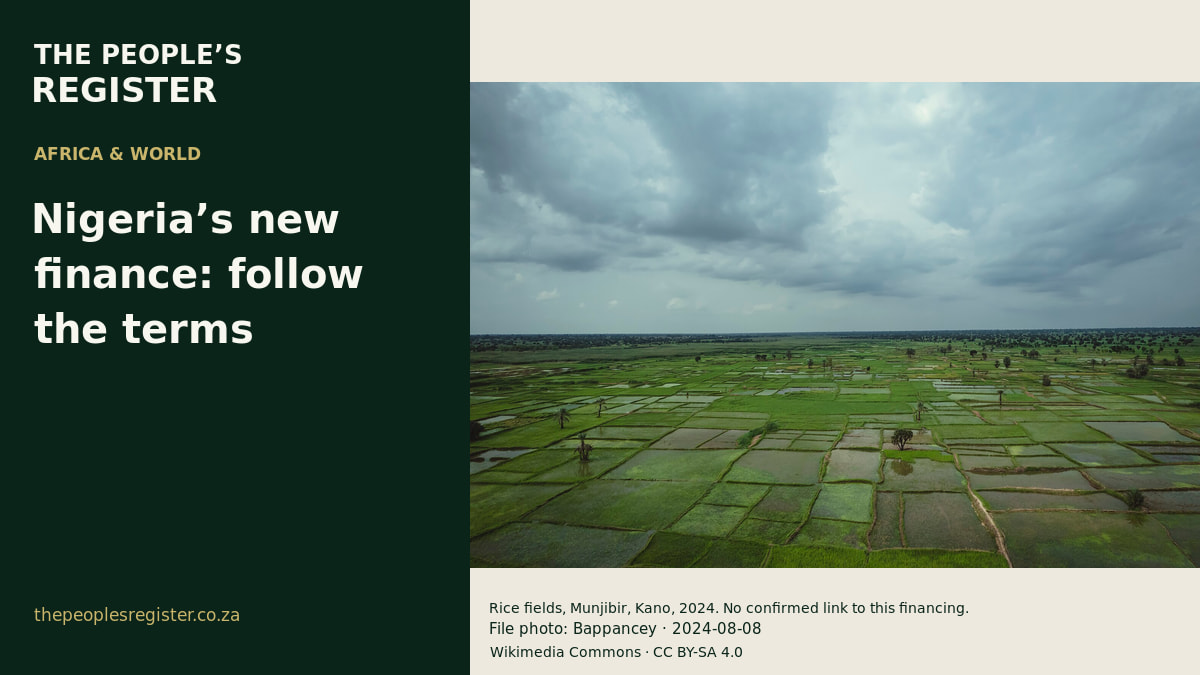
Share card: the same photograph resized without cropping or retouching, with TPR headline and branding added. Photo adaptation: CC BY-SA 4.0 (opens in a new tab).
The African Development Bank has approved a US$102 million package through Sterling Bank Nigeria, combining lending facilities with a trade-finance guarantee. The 17 November announcement (opens in a new tab) targets smaller businesses, green and social investments and vulnerable farming communities. Approval is the starting point for financing, rather than proof that every intended borrower has received it.
What the headline amount contains
| Instrument | Approved amount |
|---|---|
| Line of credit | US$50 million |
| Sustainable loan | US$20 million |
| Concessional agricultural finance | US$2 million |
| Trade-finance transaction guarantee | US$30 million |
The bank’s targets include at least 200 businesses, up to 6,000 jobs and support for more than 5,000 smallholder farmers and agricultural enterprises. At least 30% of the line of credit is intended for eligible women-owned, women-led and youth-owned firms. These are programme expectations and allocations, not measured outcomes.
A guarantee and a loan do different jobs. The former backs an eligible transaction under agreed conditions; it is not simply another cash transfer available to divide among applicants. The package should therefore be judged instrument by instrument, following the actual finance provided and the risks taken.
Borrowers need usable terms
Sterling’s agricultural finance page (opens in a new tab) already describes products for commodity-backed funding and women and young people in agribusiness. That establishes an existing product offering. It does not establish that the newly approved AfDB support is open to every reader, or that any particular applicant will meet its terms.
The questions for delivery are straightforward: when can eligible firms apply, what will they pay, what security is required and how long will they have to repay? For a farmer, repayment that falls before a crop can be sold can undermine the benefit of access to capital. For a growing business, the conditions can matter as much as the advertised amount.
A separate IFC disclosure for Sterling Bank (opens in a new tab) describes a warehouse-finance loan and a risk-sharing guarantee. That facility is separate from the newly approved US$102 million AfDB package.
Publication of borrower terms, disbursement figures and subsequent employment results will show whether this approval expands opportunity. Until then, the jobs and beneficiary numbers remain targets to be checked.